This article may contain affiliate links. If you buy through our links, we may earn a commission at no extra cost to you.
In This Article
Understanding Wind-Resistant Umbrella Engineering
Creating a serene Scandinavian-inspired outdoor space requires careful attention to both aesthetics and utility, especially when living in areas prone to unexpected gusts. Nothing ruins a peaceful afternoon tea or a seasonal gardening checklist for better harvests than a patio umbrella that constantly tips over or gets damaged by the breeze. Finding the best garden umbrellas for wind requires a departure from standard, lightweight retail options and a focus on structural integrity, aerodynamic venting, and heavy-duty materials that can withstand more than a light summer breeze. By investing in the right equipment, you can ensure your outdoor living area remains a permanent, relaxing retreat rather than a source of stress during the windier months of the year.
Key Materials for Windy Environments
When evaluating the best garden umbrellas for wind, the engineering behind the canopy is the most critical factor. Modern high-end umbrellas utilize wind-vented canopies that allow gusts to pass through the fabric rather than pushing against it, significantly reducing the amount of force exerted on the frame. If you are also focused on container gardening ideas for small spaces, you understand that stability is key. A vented canopy acts as a relief valve, preventing the sail effect that often leads to umbrellas tipping over or snapping. Look for reinforced ribs made from fiberglass or heavy-duty aluminum, which provide the necessary flexibility to bend slightly during a gust without fracturing, unlike brittle wood or weak steel components that can fail under pressure.
Choosing Between Cantilever and Center Pole Designs
Material choice dictates both the longevity and the wind tolerance of your shade solution. Marine-grade fabrics, such as solution-dyed acrylics, are not only resistant to fading but also have the weight and tensile strength to handle intense conditions without tearing. When checking our recommended products, look for fabrics with high-density weaves that offer better resistance to flapping and stretching over time. While the fabric is important, the frame material is equally vital; aviation-grade aluminum is often the gold standard for wind-prone locations because it is lightweight enough for easy operation but sturdy enough to prevent snapping. Pairing these durable materials with a well-planned garden layout—perhaps incorporating some best mosquito repellent plants nearby—can create a robust, comfortable environment that feels completely sheltered regardless of the weather.
The Importance of Proper Umbrella Bases
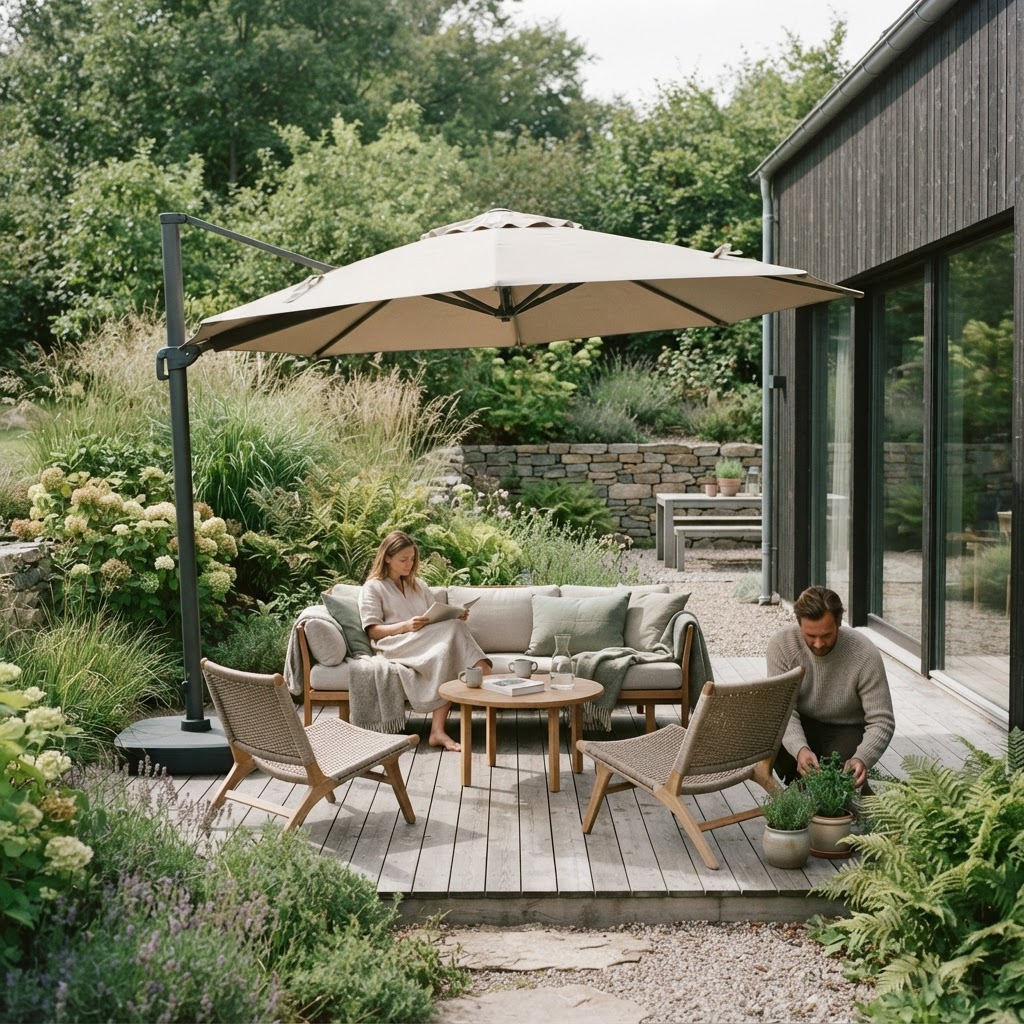
The debate between cantilever and center pole umbrellas is common, but when wind is a factor, the design choice changes the game. Center pole umbrellas are inherently more stable because the weight is distributed directly over the center of gravity. They are often the best garden umbrellas for wind because they offer a balanced structural profile that resists tilting. However, cantilever umbrellas offer superior versatility for furniture arrangements, such as when buying-outdoor-furniture-tips for a large patio. If you prefer a cantilever design, ensure it features a heavy-duty rotation mechanism that allows you to adjust the angle away from prevailing winds. Some high-end cantilever models are specifically designed with reinforced swivel points that are significantly more wind-tolerant than standard models, making them a safe choice if you have enough space to properly anchor the massive footprint they require.
Essential Maintenance for Long-Lasting Shade
Even the most expensive, wind-tested umbrella will fail if it is sitting in a cheap, lightweight base. The base is the anchor of your outdoor sanctuary, and in windy conditions, you need substantial weight to prevent your umbrella from becoming a projectile. For most residential umbrellas, a base weighing at least 50 to 100 pounds is recommended, but in very gusty areas, you might need even more. Many homeowners choose to place heavy decorative planters on top of a cross-base, which acts as both a counterweight and a way to integrate your green space, similar to how you would approach raised-bed-gardening-tips-for-beginners by keeping things anchored and organized. Ensure the pole diameter matches your base exactly to minimize wobbling; a tight, flush fit at the neck of the base is just as important as the weight of the base itself in keeping your setup secure.
Styling Your Wind-Safe Patio Space
Protecting your investment is essential for maintaining wind resistance over several years. High winds can often cause microscopic stress fractures in the ribs or fray the stitching on the canopy. Regularly checking for loose screws or worn joints is part of good garden hygiene, much like following how-to-improve-garden-soil-naturally helps your plants thrive long-term. At the end of every season, or whenever a storm warning is in effect, always collapse and secure the umbrella canopy with a dedicated tie strap. Leaving an umbrella open when it is not in use is the most common cause of premature damage. Additionally, using a heavy-duty protective cover when the umbrella is closed will prevent wind from catching loose fabric and damaging the internal crank mechanism, ensuring your umbrella stays in top shape for years to come.
Expert Safety Tips for High-Wind Days
Creating a wind-safe haven is about layering your defenses. Beyond just the umbrella, you can use physical landscape elements to break up wind currents before they reach your seating area. This is a common Scandinavian design principle, where sheltered 'micro-climates' are created using decorative fences, screens, or even strategic plantings. When you incorporate the best garden umbrellas for wind into an area that already has some natural protection, the umbrella has far less work to do. Consider the flow of your garden and how different zones interact with the breeze; placing your shade in a corner protected by two walls is always better than putting it in the center of an exposed patio. This holistic approach ensures that your outdoor string lights and cushions remain undisturbed while you enjoy a calm, breezy evening outside.
Despite all the technology, there is a limit to what any umbrella can withstand. The cardinal rule of outdoor living is that if it is windy enough to be uncomfortable, it is windy enough to close your umbrella. Never leave your umbrella unattended while it is open, even if the forecast predicts clear weather. Sudden microbursts or gusts can cause significant damage to the umbrella, your property, and potentially your neighbors. If you find you are constantly worried about the wind, it may be time to consider permanent structures or shade sails, which offer a different set of challenges but are often built to handle sustained pressure more effectively than a portable umbrella. Always prioritize safety over shade; your garden should be a place of relaxation, not a place where you are constantly watching the clouds and gauging wind speed.
Frequently Asked Questions
Recommended Products
Looking for products we personally recommend for this niche?
See our complete list of trusted tools and recommended products.
Browse Recommended Products