In This Article
Why Grow Herbs Indoors?
Imagine snipping a handful of fresh basil for your pasta, pulling a few sprigs of thyme for your roast chicken, or muddling mint for a cocktail — all from plants growing right in your kitchen. An indoor herb garden is one of the most practical and satisfying things a home cook can have. It looks beautiful, smells wonderful, and delivers flavor that dried herbs simply cannot match. The best part? You can grow herbs indoors all year round, in even the smallest space, with minimal effort once you know the basics.
The Best Herbs to Grow Indoors
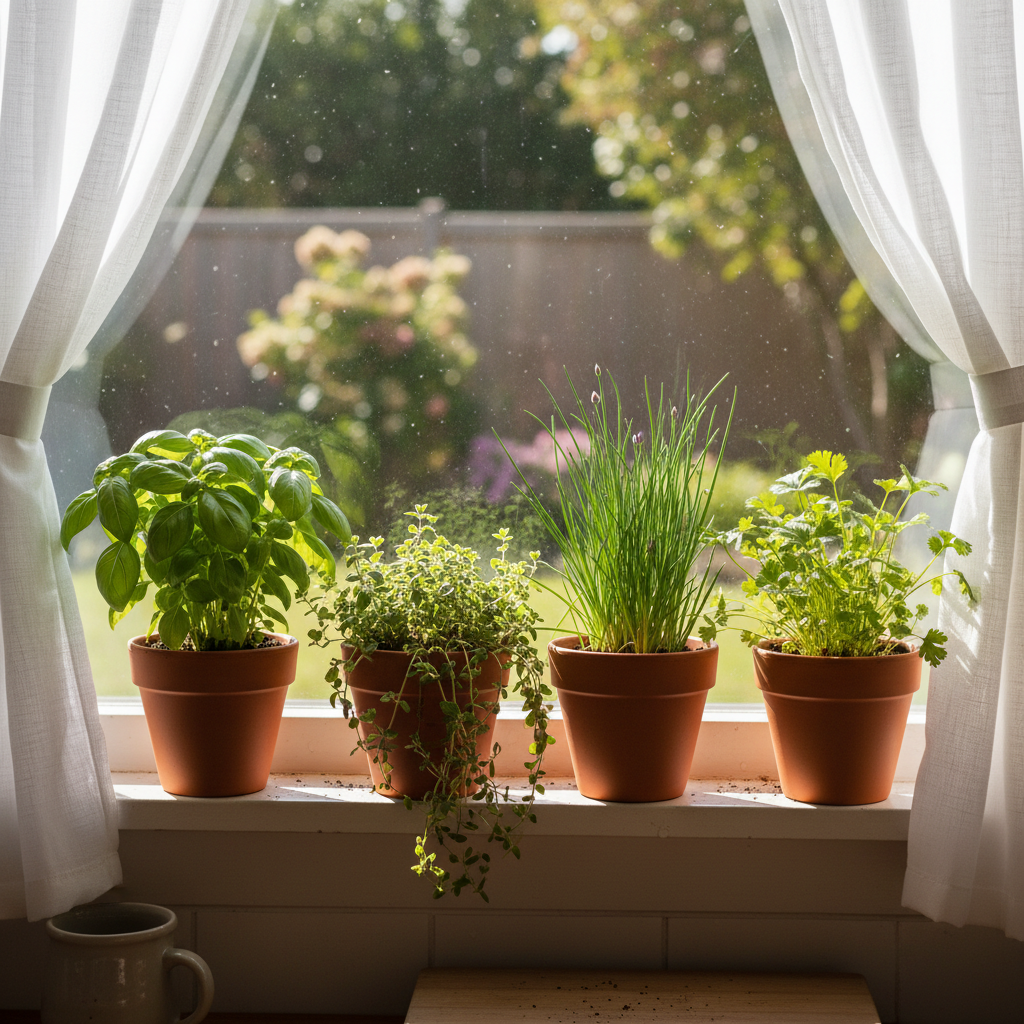
The number one factor determining success with indoor herbs is light. Most culinary herbs evolved in sunny Mediterranean or tropical environments and need a minimum of four to six hours of direct sunlight daily to thrive. South-facing windows (in the northern hemisphere) are ideal. East or west-facing windows work for less demanding herbs like mint, chives, and parsley. North-facing windows are generally too dark for herbs without supplemental grow lights. If your kitchen doesn't have adequate natural light, a full-spectrum LED grow light makes indoor herb gardening possible anywhere. Modern LED grow lights are energy-efficient, gentle on plants, and affordable — a basic clip-on model costs $15-30 and can support a small herb shelf year-round.
Light Requirements: The Most Important Factor
The easiest herbs to grow indoors are basil, chives, mint, parsley, and cilantro. Basil is the quintessential indoor herb: it grows fast, smells incredible, and loves warm indoor temperatures. Chives are nearly indestructible, tolerating lower light and irregular watering. Mint spreads vigorously — always keep it in its own container, or it will crowd out neighboring plants. Parsley is slow to germinate but rewarding once established. Cilantro grows quickly but bolts (flowers and goes to seed) rapidly in warm conditions — succession sowing small amounts every few weeks ensures a steady supply.
Choosing Pots and Soil
Slightly more challenging but very achievable indoors are thyme, rosemary, sage, and oregano. These Mediterranean herbs prefer drier conditions and excellent drainage. They need a minimum of six hours of sun and are highly sensitive to overwatering — allow the soil to partially dry out between waterings. Rosemary, in particular, is a common casualty of over-enthusiasm: it prefers lean, dry soil and infrequent watering. When in doubt with rosemary, water less rather than more.
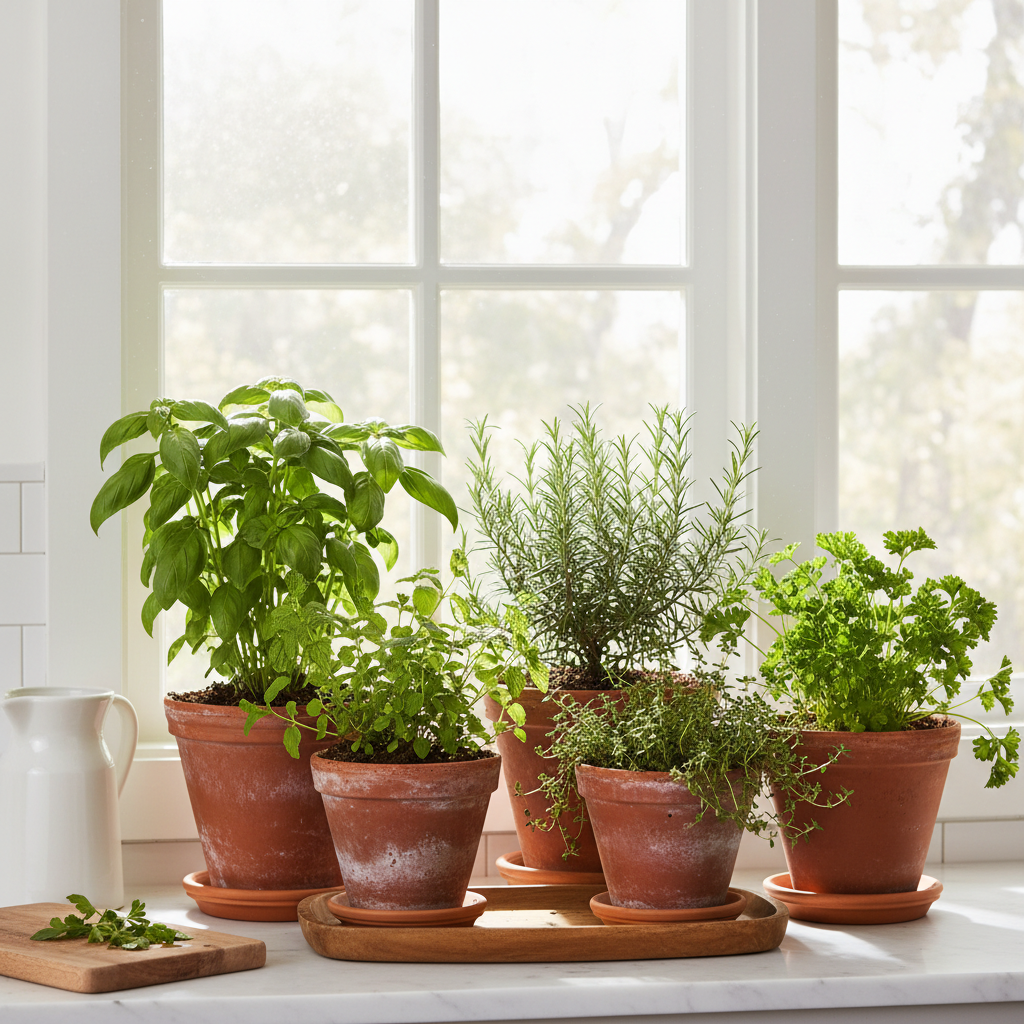
Indoor herb garden with multiple pots on a wooden shelf in kitchen
Watering and Feeding Indoor Herbs
Choosing the right pot matters more for herbs than for most plants. Small pots (four to six inches across) suit individual herbs well. Make sure every pot has drainage holes — herbs sitting in waterlogged soil will develop root rot quickly. Terracotta pots are excellent for Mediterranean herbs because they're porous and allow the soil to dry quickly between waterings. Plastic pots retain moisture longer, which suits moisture-loving herbs like mint and basil. Use a quality potting mix rather than garden soil — it's lightweight, well-draining, and formulated for container growing. You can even find mixes specifically designed for herbs.
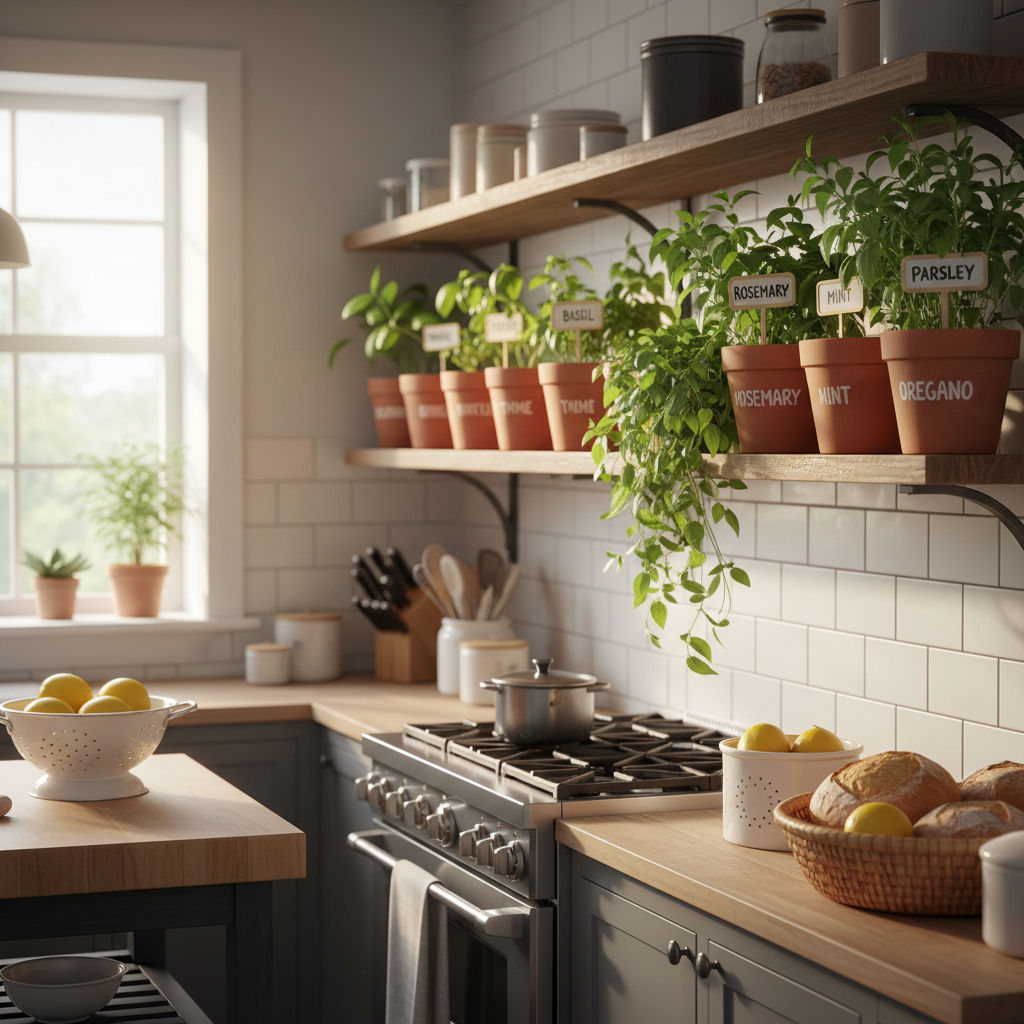
Beautiful kitchen herb garden with labeled terracotta pots
Harvesting to Keep Plants Thriving
Watering is where most indoor herb growers go wrong — typically by watering too much rather than too little. The key is to check your herbs' moisture needs individually. Mint and basil prefer consistently moist (but not soggy) soil. Thyme, rosemary, and sage prefer to dry out somewhat between waterings. A simple moisture check: push your finger an inch into the soil. If it's dry, water thoroughly until water runs from the drainage holes. If it's still moist, wait another day or two. Empty saucers after watering to prevent roots from sitting in standing water, which causes root rot.
Troubleshooting Common Problems
Most herbs also benefit from occasional feeding. Use a diluted balanced liquid fertilizer (at half the recommended strength) once a month during the growing season (spring and summer). In winter, when growth naturally slows, fertilize less frequently or not at all. Avoid over-fertilizing, which encourages soft, fast growth that's less flavorful — herbs grown slightly lean and stressed produce more intensely flavored oils. Organic options like fish emulsion or worm castings work beautifully for kitchen herbs.
Beautiful kitchen herb garden with labeled terracotta pots
FAQ
How you harvest your herbs has a huge impact on the plant's health and longevity. Never take more than one-third of the plant at one time. For basil, always pinch from the top of the stem just above a leaf node — this encourages branching and a bushier, more productive plant. Remove any flower buds as soon as they appear on basil, cilantro, and chives: once herbs flower (bolt), leaf production slows and flavor diminishes. For woody herbs like rosemary, thyme, and sage, harvest stem tips regularly to keep the plant tidy and productive. Regular harvesting is actually beneficial — it signals the plant to keep producing fresh growth.
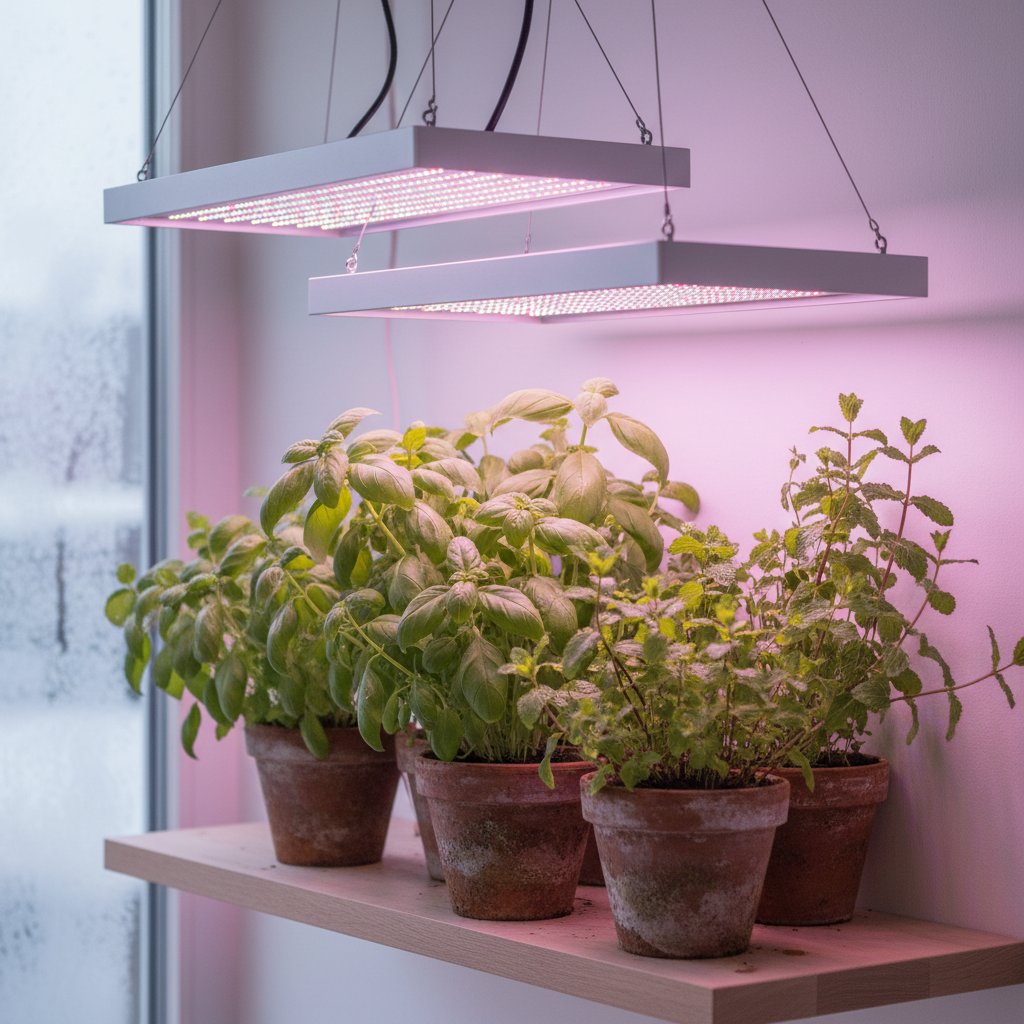
Herbs growing under indoor grow lights, basil and mint in terracotta pots
Common indoor herb problems are usually easy to fix once you know what to look for. Yellowing leaves typically indicate overwatering or insufficient light. Leggy, stretched plants are reaching for more light — move them closer to the window or add a grow light. Wilting despite moist soil suggests root rot from overwatering. White powdery coating on leaves is powdery mildew — caused by poor air circulation; space plants further apart and improve ventilation. Small insects (particularly fungus gnats) are attracted to overly moist soil — let soil dry more between waterings and use yellow sticky traps. With a little observation, indoor herb issues are almost always easily corrected.
Frequently Asked Questions
Recommended Products
Looking for products we personally recommend for this niche?
See our complete list of trusted tools and recommended products.
Browse Recommended Products