In This Article
Why Container Gardening Works in Any Small Space
You don't need a yard, a garden plot, or even a large outdoor space to grow beautiful plants and delicious food. Container gardening transforms balconies, patios, doorsteps, windowsills, and even indoor spaces into thriving green gardens. It's the most flexible form of gardening — you can move your containers to follow the sun, rearrange them for seasonal looks, and bring tender plants indoors when frost threatens. Whether you have a sprawling roof terrace or a single sunny windowsill, container gardening makes it possible to grow.
Choosing the Right Containers
The secret to successful container gardening is starting with the right containers. Size matters enormously — too small and plants become rootbound, stressed, and require constant watering; too large and soil can become waterlogged around the roots. As a general rule: herbs are happy in 4-6 inch pots; salad greens need 6-8 inch depth; tomatoes, peppers, and cucumbers need containers at least 12-18 inches deep and wide; root vegetables need 12+ inches of depth. Drainage is non-negotiable — every container must have holes in the base. If you fall in love with a decorative pot that lacks drainage, use it as an outer sleeve for a plain pot with holes inside.
The Best Plants for Container Gardens
Material matters for containers too. Terracotta is breathable and classic — great for Mediterranean herbs and succulents that like to dry out between waterings. Plastic is lightweight, retains moisture longer (less watering needed), and is ideal for vegetables and moisture-loving plants. Fabric grow bags are surprisingly excellent for vegetables: they're breathable, prevent overwatering by allowing air to reach roots, and their pruning effect on roots (when roots reach the bag edge, they stop growing and branch instead) creates denser, more productive root systems. Fabric bags are also foldable and inexpensive, making them ideal for small spaces. For an in-depth look at planters, see our guide to best outdoor planters for every space.
Creative Small Space Container Ideas
Vertical gardening is one of the most powerful strategies for maximizing small spaces. A simple trellis attached to a wall or fence supports climbing plants — pole beans, cucumbers, peas, and nasturtiums — without taking up any ground space. Pallet planters (pallets stood upright, pockets filled with soil) can hold dozens of small plants on a single wall. Wall-mounted pocket planters create instant vertical herb or strawberry gardens on fences and walls. Rail planters hang on balcony railings and grow salad greens, herbs, or trailing flowers without using floor space at all.
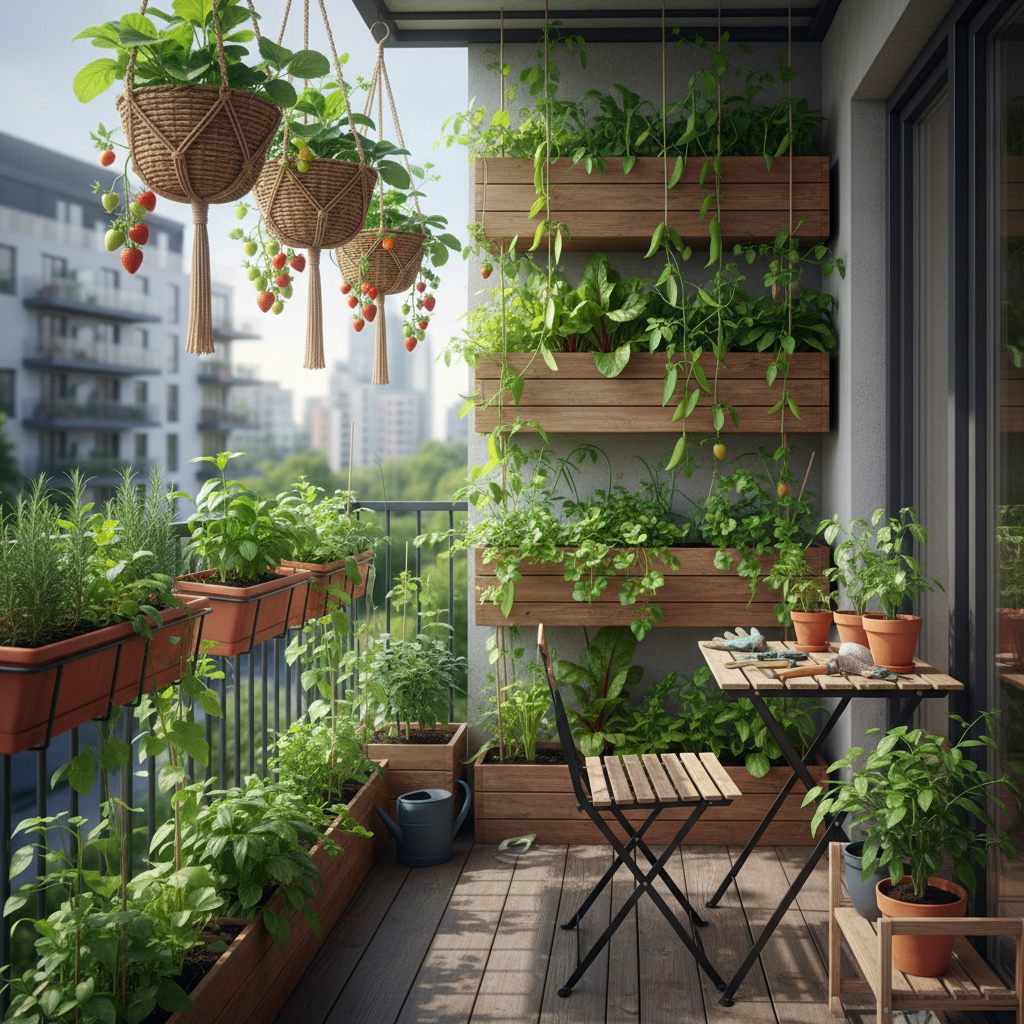
Compact balcony vegetable garden with tiered planters and hanging baskets
Going Vertical: Walls, Trellises, and Rail Planters
Hanging baskets add a beautiful third dimension to small gardens. Traditional hanging baskets planted with tumbling tomatoes, trailing petunias, strawberries, or mixed herbs create visual impact above head height while keeping floor space clear. Line hanging baskets with coconut coir liners — they're breathable, biodegradable, and retain moisture well. Hanging baskets dry out quickly because of their exposure to air on all sides, so plan to water daily in hot weather or add a self-watering reservoir insert.
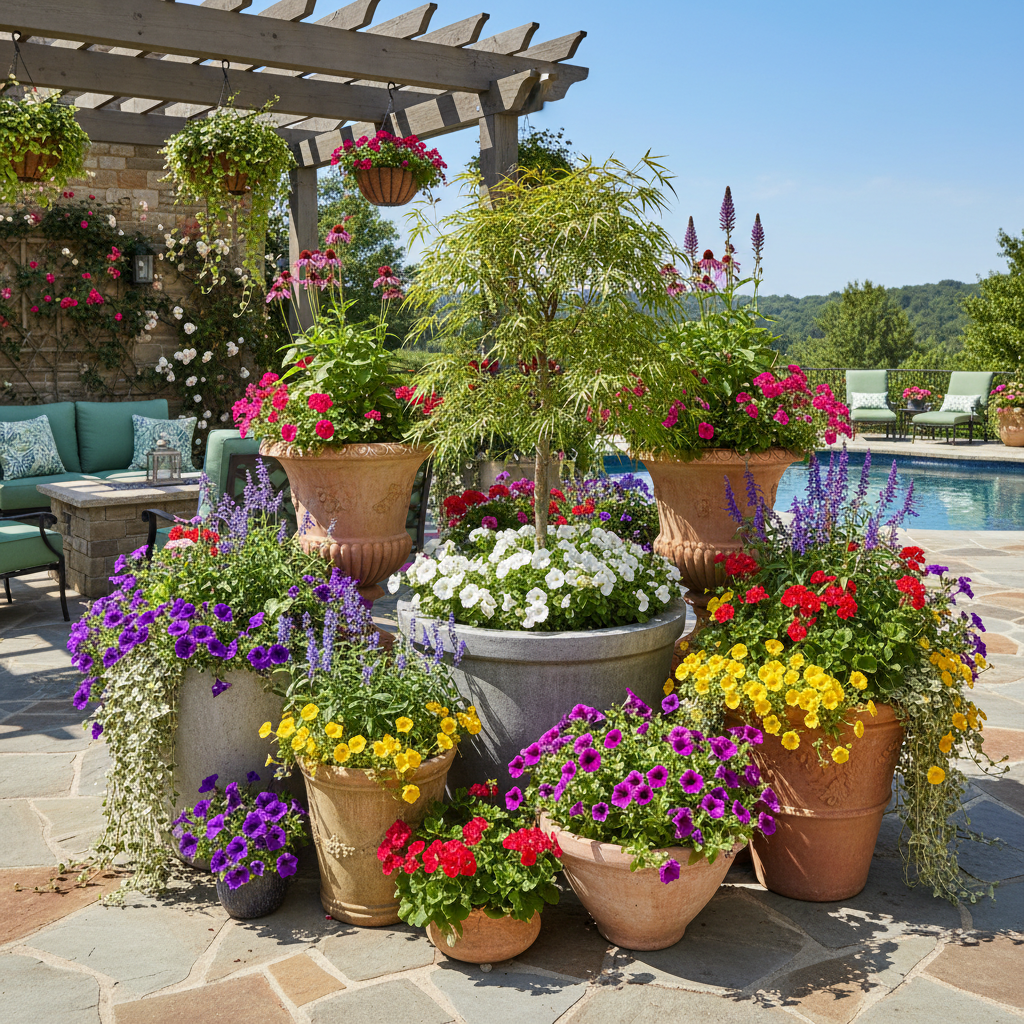
Large decorative outdoor planters with colorful flowering plants on patio
Soil, Watering, and Feeding in Containers
Tiered plant stands are another excellent space multiplier. A single three-tier wooden or metal stand can hold nine or twelve pots in the footprint of one, creating a compact herb garden, a rainbow of flowering annuals, or a mixed vegetable and flower display. Tiered stands look beautiful on patios, against walls, and on apartment balconies. Choose one with adjustable heights to accommodate plants of different sizes.
FAQ
Container plants need more attention than in-ground gardens because their resources are limited. Water more frequently — containers dry out significantly faster than garden beds, especially in hot weather and on sunny balconies. Check daily in summer and water whenever the top inch of soil is dry. Stick your finger in to check rather than guessing. Invest in a self-watering pot or container irrigation system if you travel frequently or struggle to water consistently.
Large decorative outdoor planters with colorful flowering plants on patio
Feeding is essential in containers because nutrients leach out with each watering and the limited soil volume can only hold so many nutrients to begin with. Use a slow-release granular fertilizer mixed into the soil when planting, then supplement with a liquid feed every one to two weeks during the growing season. Tomatoes and peppers benefit from a high-potassium liquid feed once they start flowering. Herbs prefer leaner conditions — over-fertilized herbs grow lush but lose the intensity of flavor that makes them worth growing. For soil improvement ideas, see our guide on improving garden soil naturally.
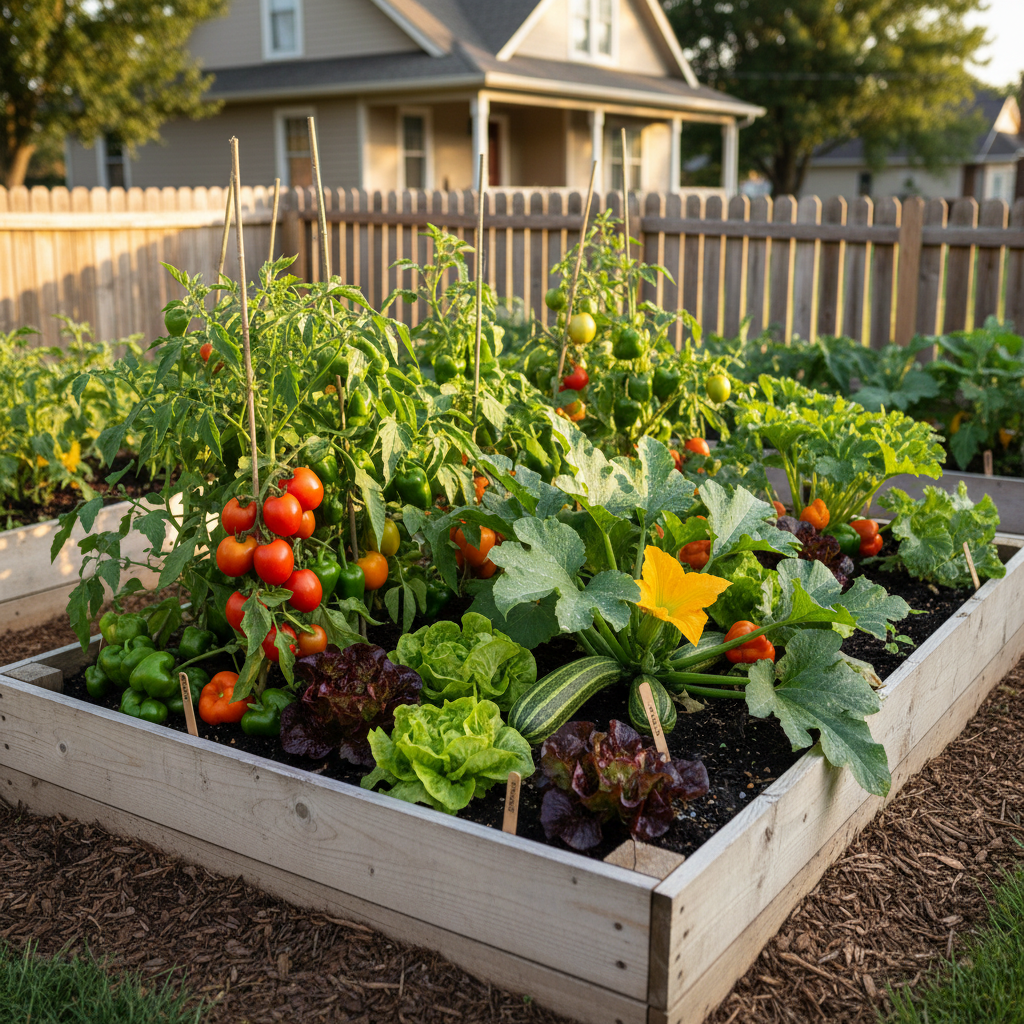
Productive small container vegetable garden with tomatoes and herbs
One creative idea that works brilliantly in small spaces is a 'salad table' — a shallow, wide container (like a window box or repurposed wooden crate) planted densely with mixed salad greens, herbs, and edible flowers. Placed on a table or bench at a convenient height, it provides a constant supply of fresh cut-and-come-again leaves with minimal effort. Succession sow every few weeks by pulling finished plants and replanting seeds or seedlings. A salad table on a kitchen windowsill or just outside a back door is one of the most practical container garden setups you can create. Read our small garden vegetable guide for the best salad and herb varieties.
Frequently Asked Questions
Recommended Products
Looking for products we personally recommend for this niche?
See our complete list of trusted tools and recommended products.
Browse Recommended Products