In This Article
Why Soil Quality Is Everything in Gardening
Experienced gardeners have a saying: don't feed your plants, feed your soil. When your soil is healthy — full of organic matter, teeming with beneficial microbes, well-draining but moisture-retentive — plants practically grow themselves. When your soil is poor — compacted, nutrient-depleted, waterlogged, or too acidic — even the most expensive plants struggle. The good news is that improving garden soil naturally is one of the most satisfying and transformative things you can do for your garden, and it doesn't require chemicals or expensive products.
Understanding Your Soil Type
Before you can improve your soil, you need to know what you're working with. Sandy soil drains too quickly and doesn't hold nutrients well. Clay soil drains poorly, compacts easily, and becomes waterlogged in wet weather. Silty soil is fertile but can compact and crust over. Most garden soils are a combination (called loam), and the ideal garden soil contains roughly 40% sand, 40% silt, and 20% clay, with a generous proportion of organic matter. A simple test: take a handful of moist soil and squeeze it. If it crumbles, it's sandy. If it holds a firm shape and feels slippery, it's clay. If it holds shape but crumbles when poked, it's a good loam.
Adding Compost: The Single Best Improvement
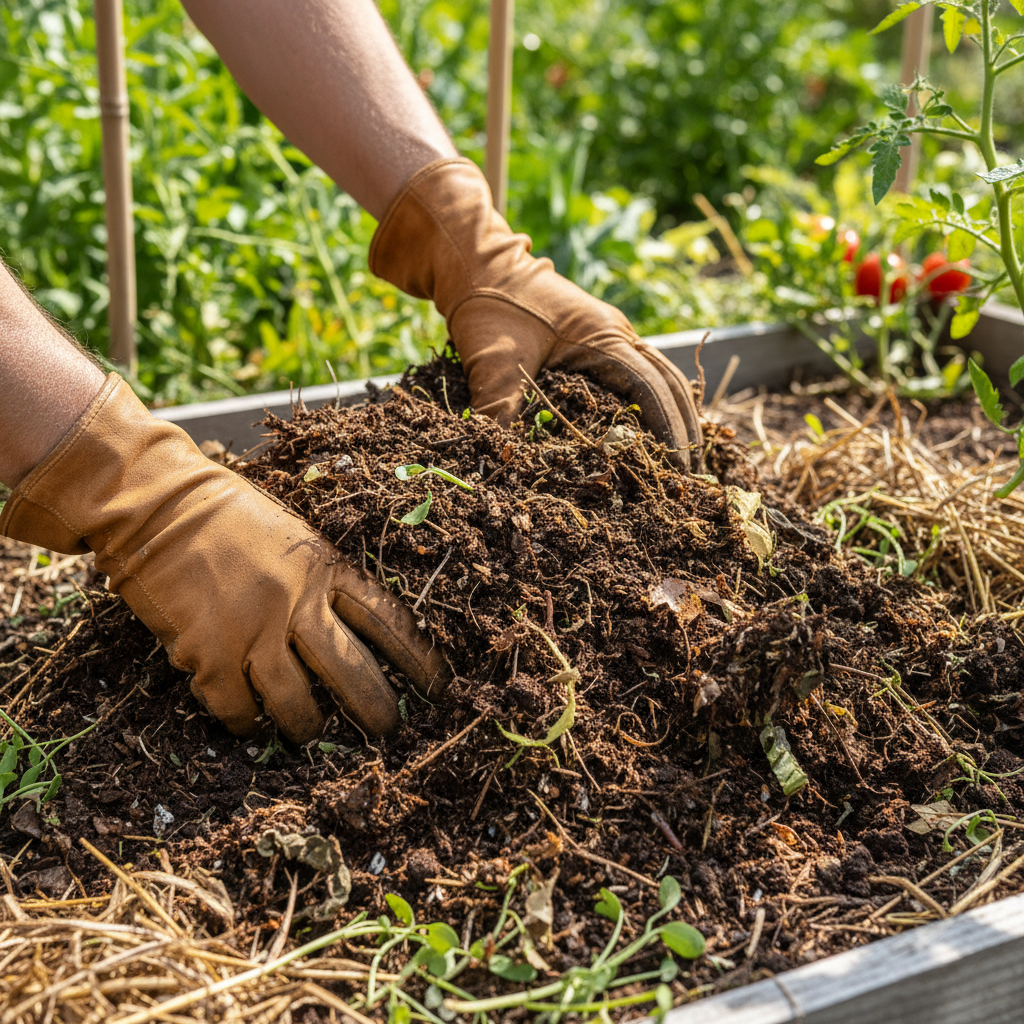
Compost is the single most powerful soil amendment you can use. It's free to make, beneficial for every soil type, and improves nearly every aspect of soil quality: it loosens clay soil for better drainage, helps sandy soil retain moisture and nutrients, adds billions of beneficial microorganisms per teaspoon, and delivers a slow-release supply of all the major and minor nutrients plants need. Add 2-4 inches of compost to your beds every spring and work it into the top 12 inches of soil. You can buy compost or make your own for free from kitchen and garden waste. Our guide on easy composting for home gardeners shows you exactly how.
Natural Mulching for Healthier Soil
Mulching is the soil improvement technique that takes the least effort for the greatest return. A 2-3 inch layer of organic mulch (wood chips, straw, shredded leaves, or grass clippings) spread over bare soil suppresses weeds, retains moisture (reducing watering needs by up to 50%), moderates soil temperature, and gradually decomposes to add organic matter to the soil below. As earthworms and soil organisms break down the mulch from below, they create channels in the soil that improve drainage and aeration. Simply reapply mulch as it breaks down, and your soil will improve continuously over time.
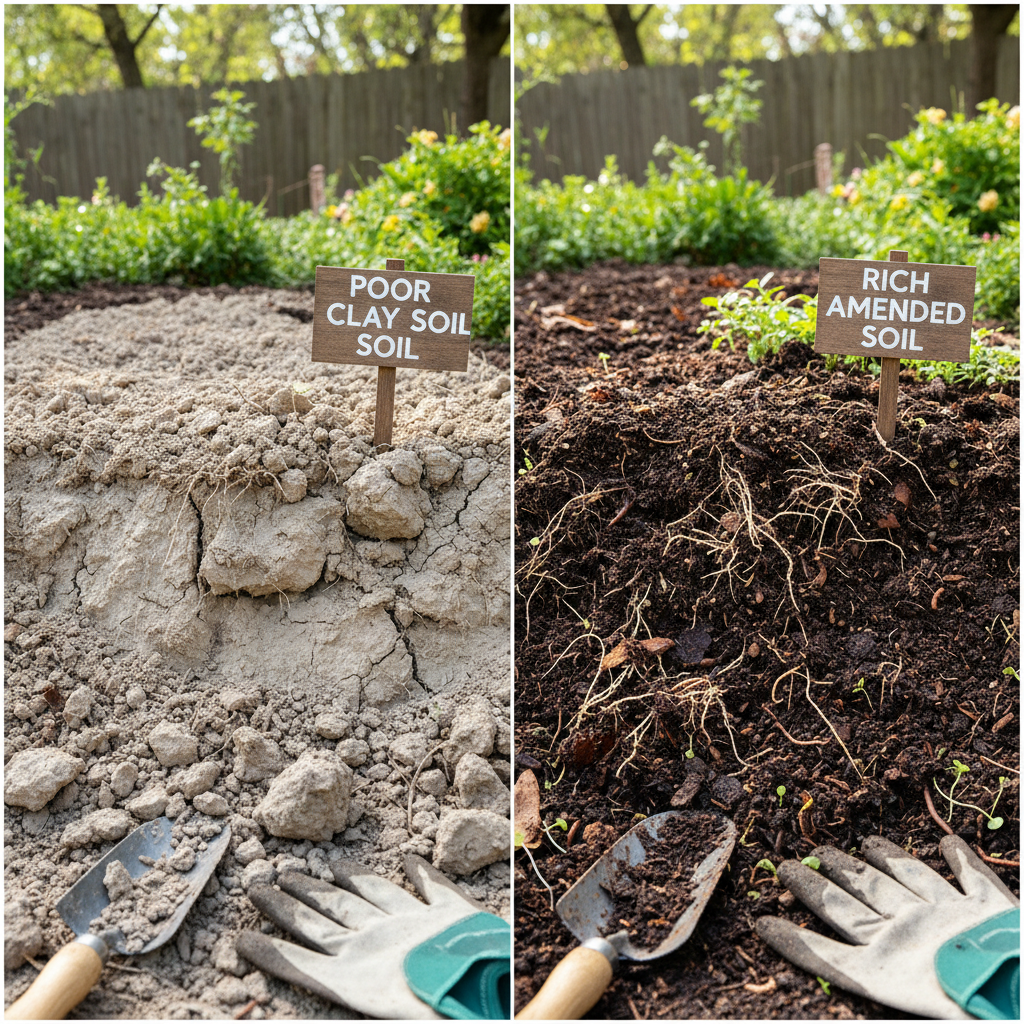
Comparison of poor compacted soil versus rich amended garden soil
Green Manures and Cover Crops
Green manures (also called cover crops) are plants grown specifically to improve soil rather than to harvest. When turned into the soil before flowering, they add organic matter, nitrogen, and other nutrients. Fast-growing options like phacelia, mustard, and buckwheat can be sown in empty beds between crops and turned in within six to eight weeks. Nitrogen-fixing legumes like clover, vetch, and field beans take nitrogen from the air and store it in root nodules — when dug in, they release this nitrogen for the following crop. Green manures are especially valuable for improving new garden beds with poor soil.
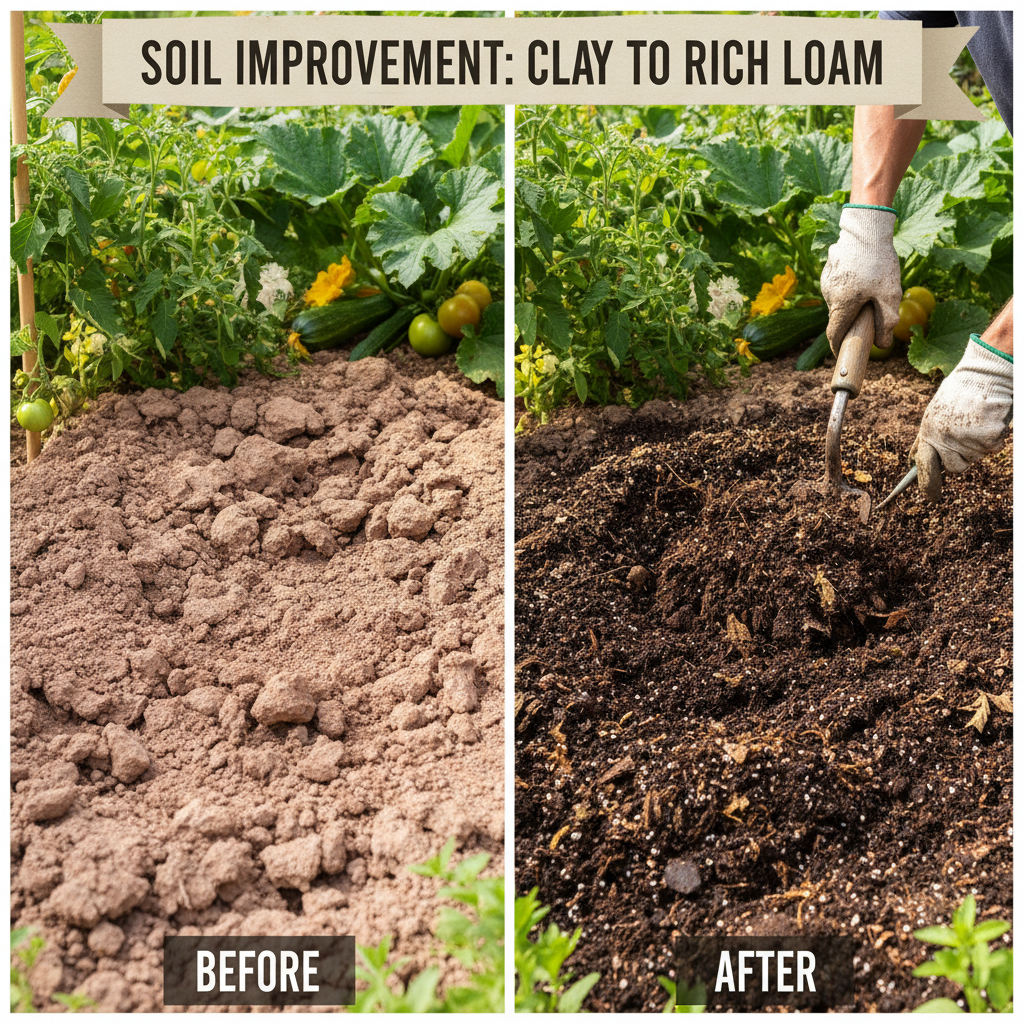
Gardener adding compost and organic amendments to garden bed soil
Fixing Drainage and pH Naturally
Worm castings (vermicompost) are among the most nutrient-dense soil amendments available. They're produced by worms as they digest organic matter and are loaded with plant-available nutrients, beneficial bacteria, and natural growth hormones. You can set up a small worm bin (vermicomposting) at home using kitchen scraps and harvest castings every few months. Apply them as a top-dressing around plants or mix them into your compost. Even a small amount of worm castings has a measurable positive effect on plant growth and soil biology.
Building Soil Over Time
Soil pH determines how available nutrients are to plants. Most vegetables prefer a slightly acidic to neutral pH of 6.0-7.0. If your soil is too acidic (below 6.0), add garden lime (calcium carbonate) to raise the pH. If your soil is too alkaline (above 7.5), add elemental sulfur or acidic organic matter like pine needles or composted oak leaves. Always test your soil pH before amending it — inexpensive test kits are available at garden centers. Blueberries, rhododendrons, and azaleas specifically prefer acid soil (pH 4.5-5.5).
Gardener adding compost and organic amendments to garden bed soil
FAQ
Drainage issues are among the most damaging soil problems. Waterlogged soil is oxygen-depleted, causing roots to suffocate and rot. To improve drainage in heavy clay soil, incorporate large amounts of coarse grit or sharp sand (at least 25% by volume — small amounts can actually make drainage worse by filling pore spaces). Raised beds are the most reliable solution for truly problematic drainage: by gardening above the native soil, you sidestep the drainage problem entirely. Read our raised bed guide for more on this approach. If you're dealing with a large area of poor drainage, consider installing perforated pipe drainage or creating a bog garden feature in the wettest spots.
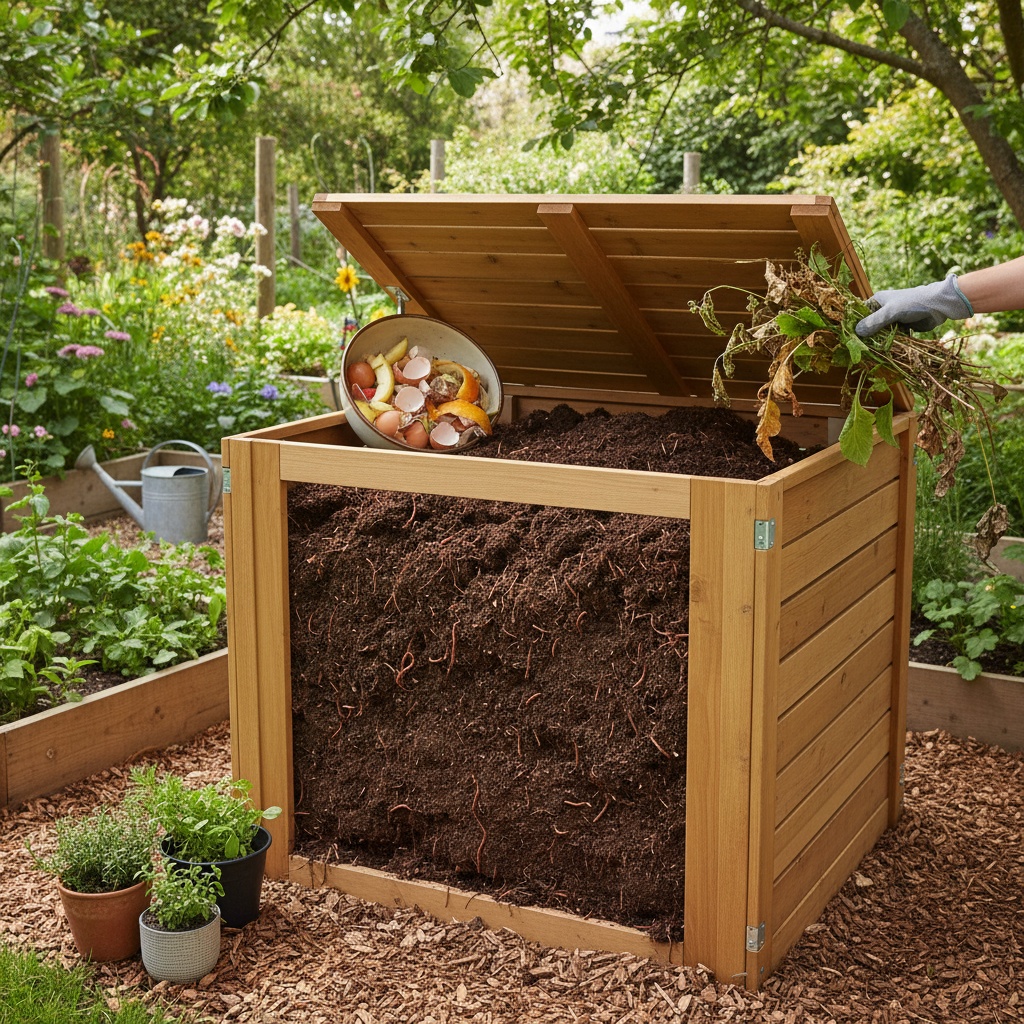
Home composting bin with kitchen scraps and garden waste
Great soil isn't built in a single season — it's a long-term investment. Each year you add compost, mulch, and organic matter, your soil's structure, biology, and fertility improve. Long-term no-dig gardening (laying compost on top rather than digging it in) has been shown to build exceptional soil more quickly than conventional digging, because it preserves the fungal networks and soil structure that form the basis of long-term fertility. Follow your soil improvement work with thoughtful seasonal planning — our seasonal gardening checklist keeps you on track throughout the year.
Frequently Asked Questions
Recommended Products
Looking for products we personally recommend for this niche?
See our complete list of trusted tools and recommended products.
Browse Recommended Products