In This Article
Why Composting is a Game-Changer for Gardeners
Composting is the gardener's superpower. It transforms what would otherwise be waste — kitchen scraps, garden trimmings, fallen leaves — into one of the most valuable substances you can give your garden: rich, dark, crumbly compost that improves soil, feeds plants, and reduces the need for purchased fertilizers. It's completely free, surprisingly simple, and one of the best habits you can develop as a gardener. This guide gives you everything you need to start a successful compost system at home, even if you've never tried before.
What to Compost: The Greens and Browns Explained
Composting works by harnessing the natural processes of decomposition. Microorganisms — bacteria, fungi, and other microbes — break down organic matter, releasing nutrients and energy in the process. The pile heats up as microbial activity increases, accelerating decomposition and killing weed seeds and pathogens. With the right balance of materials, adequate moisture, and occasional turning to add oxygen, you can have usable compost in as little as six to eight weeks in warm weather, or three to six months at cooler temperatures.
Setting Up Your First Compost System
The foundation of good composting is balancing 'greens' (nitrogen-rich materials) and 'browns' (carbon-rich materials). Greens include fresh grass clippings, vegetable and fruit scraps, coffee grounds, tea bags, fresh plant trimmings, and spent flowers. Browns include dried leaves, cardboard (torn up), newspaper, straw, wood chips, egg cartons, and paper bags. The ideal ratio is roughly 25-30 parts carbon (browns) to 1 part nitrogen (greens) by weight — in practice, this means adding about two or three times as much brown material as green material. Too many greens creates a slimy, smelly pile. Too many browns creates a pile that decomposes very slowly.
How to Layer and Build Your Compost
Choosing the right composting system depends on your space and goals. The simplest option is an open heap in a corner of your garden — free, easy, but slow and potentially untidy. A wooden compost bin (three pallets wired together) is cheap, effective, and easy to access. Proprietary plastic compost bins are compact and contained — good for smaller gardens. A three-bin system (one active pile, one resting, one finished compost) is the most efficient setup for serious composters. For apartments and homes without outdoor space, a worm bin (vermicomposting) works indoors with virtually no smell.
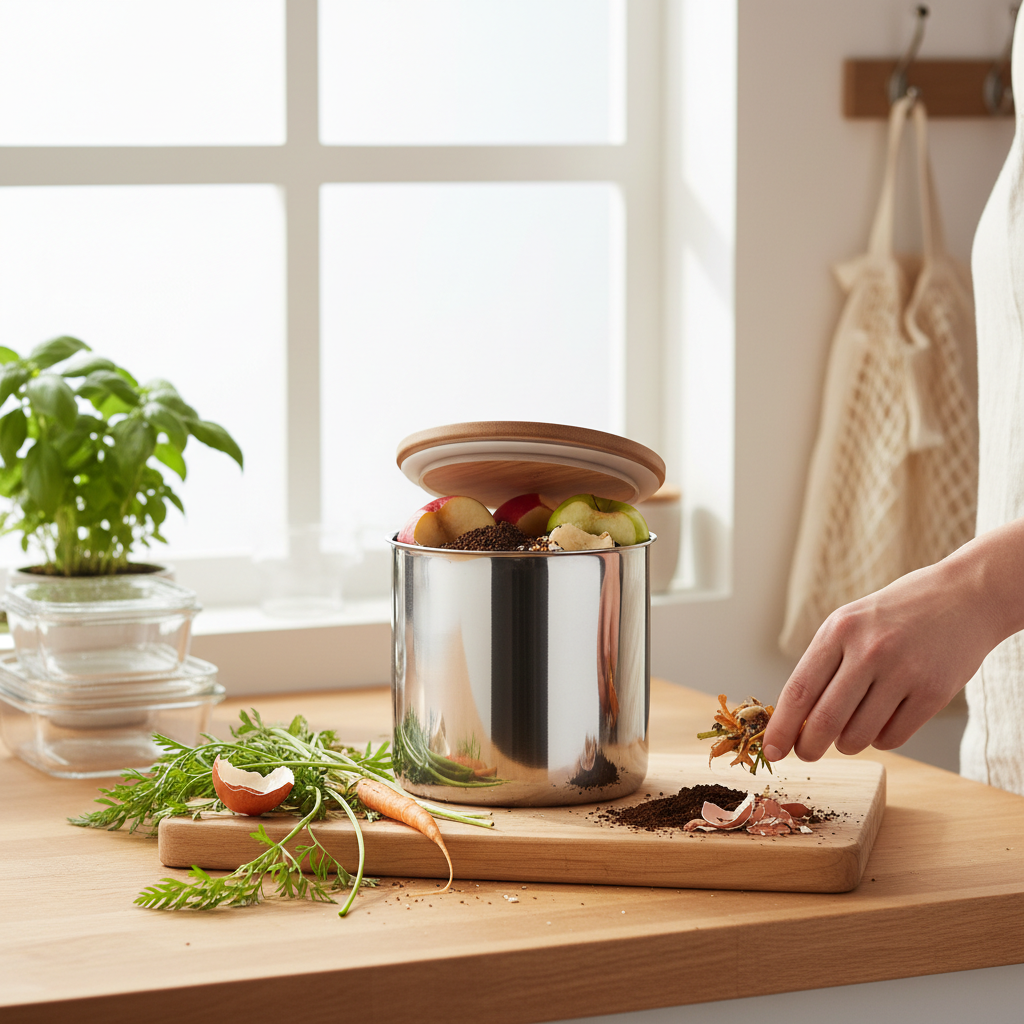
Kitchen counter with vegetable scraps being collected for composting
Troubleshooting Common Compost Problems
Build your compost in layers rather than tossing everything on at once. Start with a 4-inch layer of coarse browns (wood chips, shredded cardboard) at the base for drainage and aeration. Add 2-3 inches of greens (kitchen scraps, fresh grass). Top with another 4-inch layer of browns. Repeat this pattern, watering each layer until it feels like a wrung-out sponge. The pile should be moist but never dripping wet. Cover the pile to retain moisture and warmth in cooler weather. Turn the pile every one to two weeks to add oxygen, which is the single most effective way to speed up decomposition.
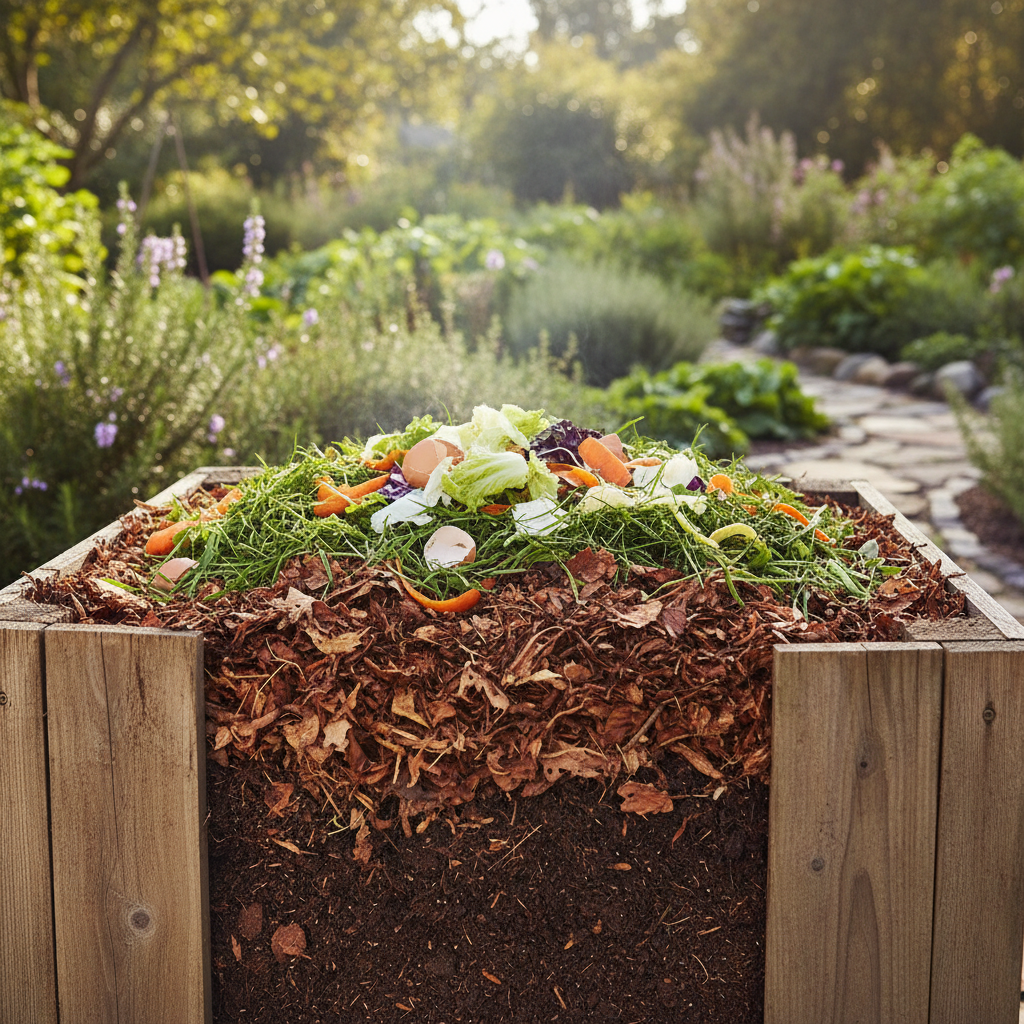
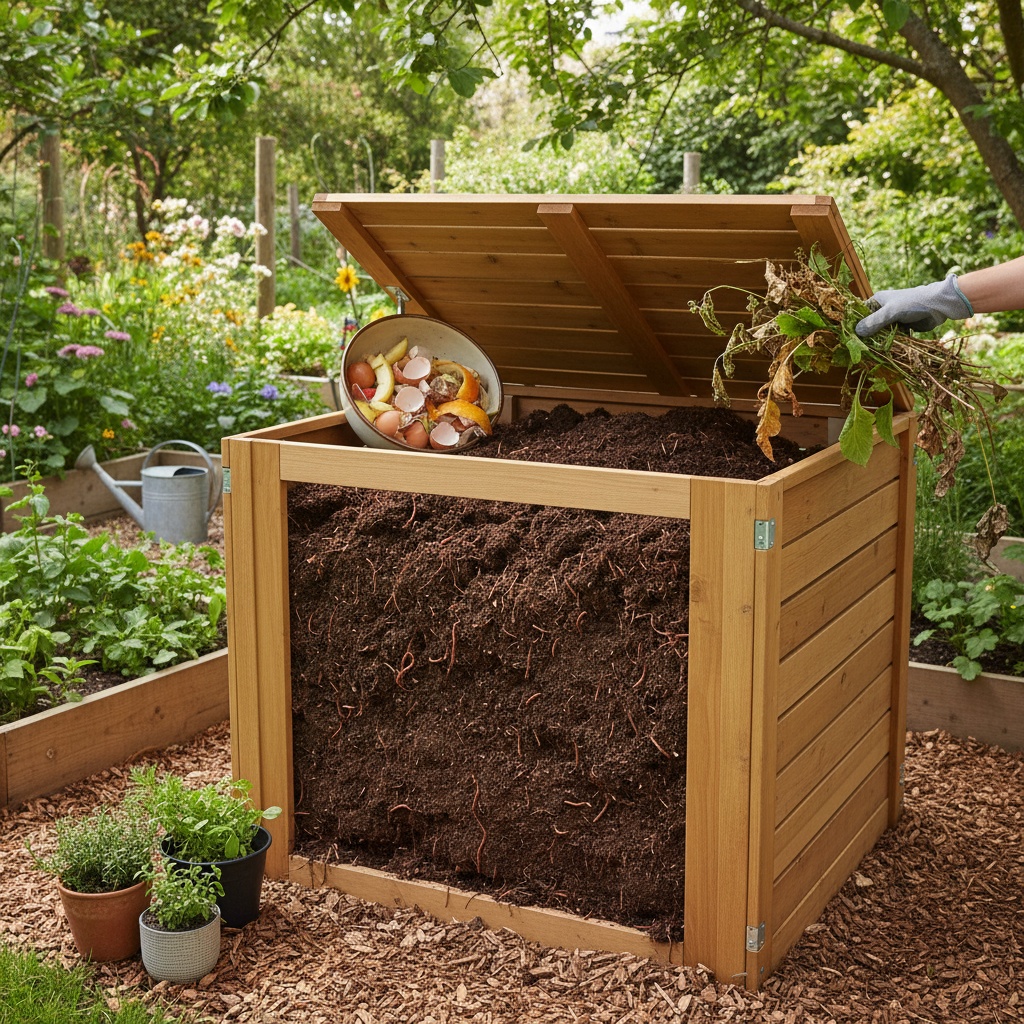
Finished dark rich compost in a wooden compost bin
Using Finished Compost in Your Garden
A well-managed compost pile should smell earthy and pleasant — like a forest floor after rain. Common problems are easy to fix. Smelly (ammonia): too many greens, add more browns and turn. Smelly (rotten eggs): too wet and compacted, add dry browns and turn to aerate. Not decomposing: too dry (add water and moist kitchen scraps), too cold (insulate or wait for warmer weather), or needs nitrogen (add grass clippings). Pests (rats, foxes): never add meat, fish, cooked food, or dairy to an open compost pile — these attract vermin. Always bury kitchen scraps in the center of the pile.
Worm Composting: The Indoor Alternative
Finished compost is dark, crumbly, earthy-smelling, and unrecognizable as its original ingredients. It's ready to use when the original materials have completely broken down and you can no longer identify what went in. To use it, spread a 2-4 inch layer over garden beds in spring and work it into the top 12 inches of soil. For raised beds, add 2-3 inches as an annual top-dressing. Mix it into potting soil for containers (up to 30% compost by volume). Spread it as a top-dressing mulch around established plants. Water well after applying. The difference compost makes to plant growth is remarkable and visible within weeks.
Finished dark rich compost in a wooden compost bin
FAQ
Worm composting (vermicomposting) is the perfect solution for gardeners without outdoor space or those who want to compost year-round indoors. A worm bin uses red wiggler worms (Eisenia fetida, not regular garden earthworms) to rapidly convert kitchen scraps into nutrient-dense worm castings. A properly set-up worm bin has virtually no smell, processes a surprising amount of kitchen waste, and produces both rich solid castings and a liquid 'worm tea' that can be diluted and used as a liquid fertilizer. Worm bins can be kept under the kitchen sink, in a garage, or on a balcony. Connecting composting to soil improvement is key — see our guide on naturally improving garden soil for how to make the most of your finished compost.
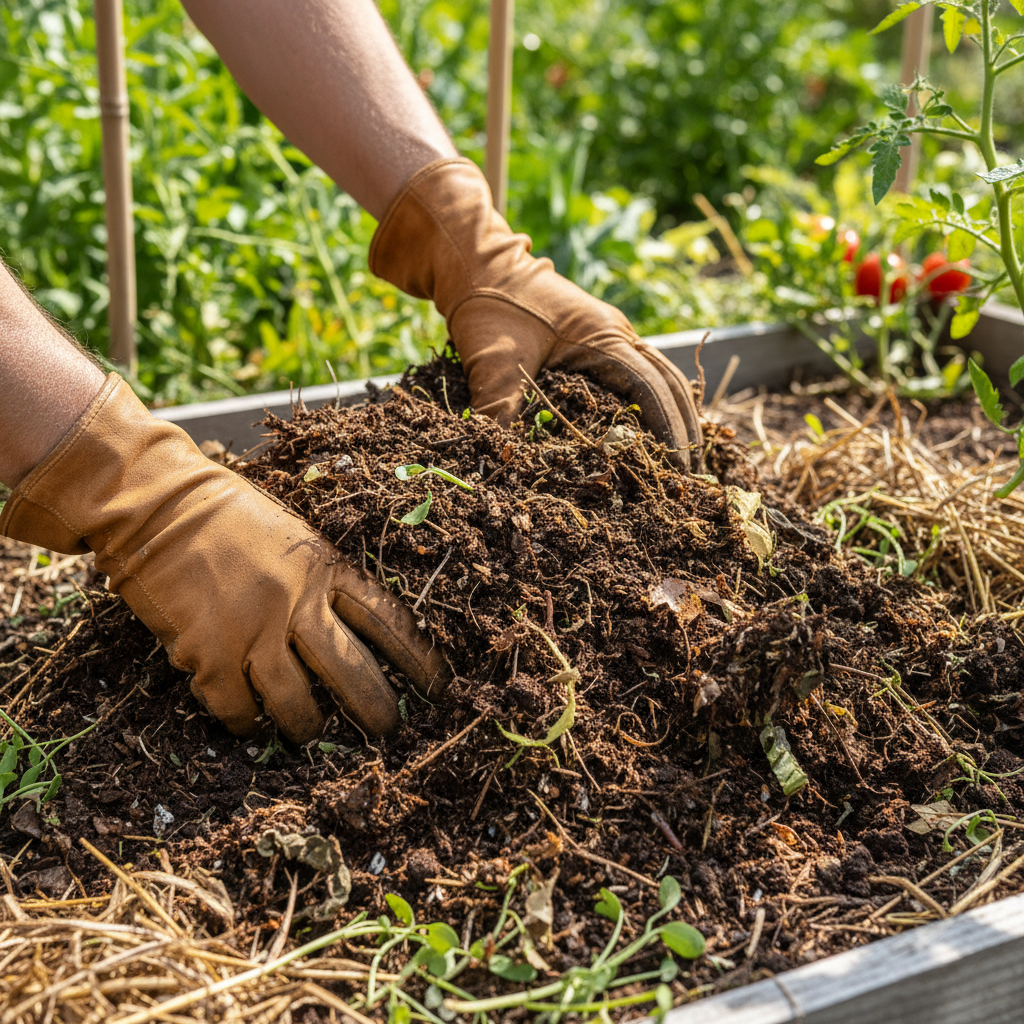
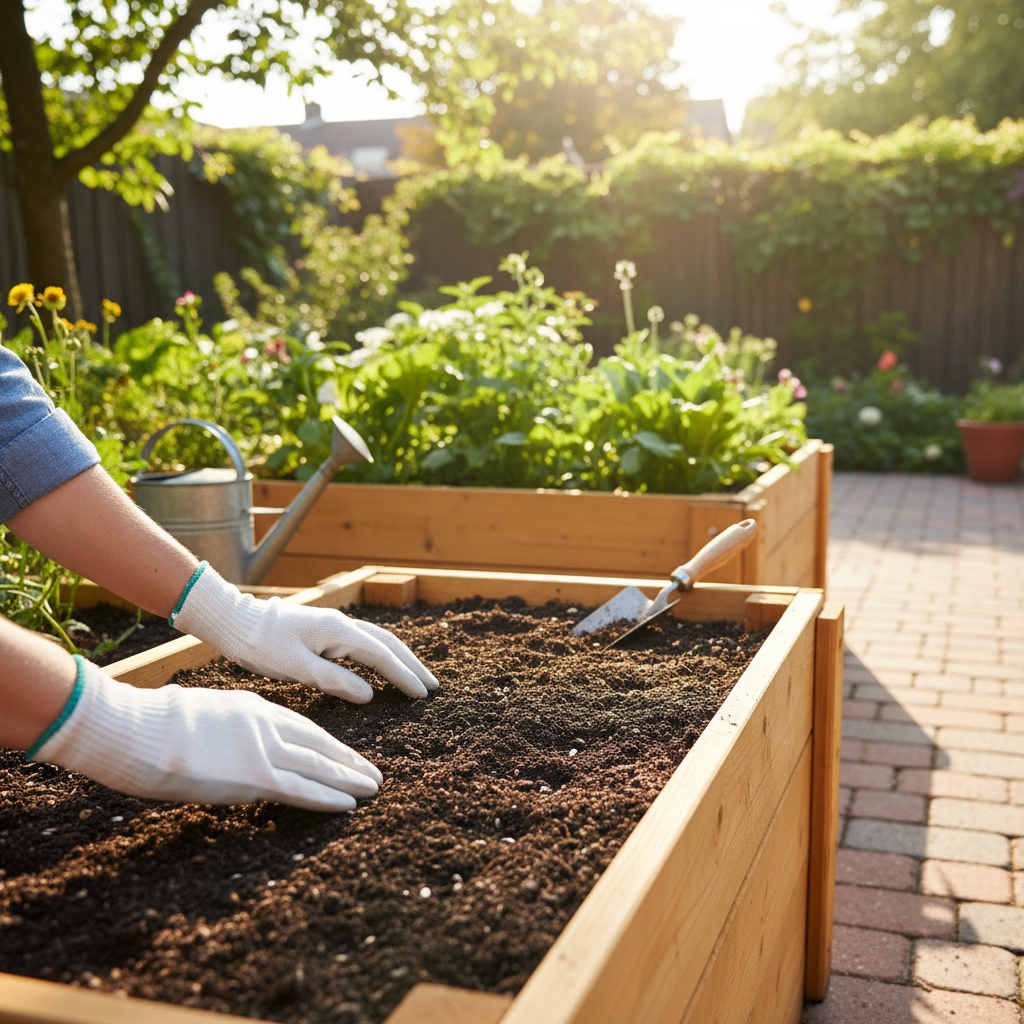
Rich dark compost being mixed into garden bed soil
Frequently Asked Questions
Recommended Products
Looking for products we personally recommend for this niche?
See our complete list of trusted tools and recommended products.
Browse Recommended Products