In This Article
Why Raised Beds Are the Best Choice for Beginners
If you're new to gardening and want to maximize your chances of success, start with a raised bed. Raised garden beds are widely considered the most beginner-friendly way to grow vegetables, herbs, and flowers. They give you complete control over your soil quality, they drain beautifully, they warm up faster in spring, and they look gorgeous in any backyard or patio setting. This comprehensive guide walks you through everything you need to know — from building your first bed to harvesting your last tomato of the season.
Choosing the Right Materials
The biggest advantage of raised beds is total control over your growing environment. In-ground gardens mean working with whatever soil you happen to have — which in many gardens is compacted, nutrient-poor, or full of clay. With a raised bed, you fill it with exactly the right soil mix from the start. You're essentially creating a perfect environment for plants rather than trying to improve an imperfect one. This translates directly into better germination, stronger root systems, fewer pests and diseases, and higher yields.
The Ideal Size and Placement
When it comes to materials, cedar is the gold standard. Western red cedar is naturally rot-resistant, safe for growing food, and develops a beautiful silver-grey patina over time. It's typically more expensive than pine but lasts 10-15 years without treatment. Douglas fir and redwood are also excellent choices. Avoid pressure-treated lumber with CCA (chromated copper arsenate) near food crops. Galvanized steel beds are increasingly popular for their modern look and 20+ year lifespan. Recycled composite materials work well too — they're lightweight and low-maintenance. Whatever you choose, make sure it's food-safe.
The Perfect Raised Bed Soil Mix
The ideal raised bed for beginners is 4 feet wide and at least 8 feet long, though any size works. The 4-foot width is critical: it means you can reach the center from either side without stepping in the bed, which prevents soil compaction. Never make a bed wider than you can comfortably reach across. Height matters too: a minimum of 6 inches is workable, but 12 inches gives most vegetables excellent root room, and 18-24 inches is ideal for deep-rooted crops and people with back issues who prefer to garden standing up. Place your bed in the sunniest available spot, ideally oriented north-to-south to minimize plants shading each other.
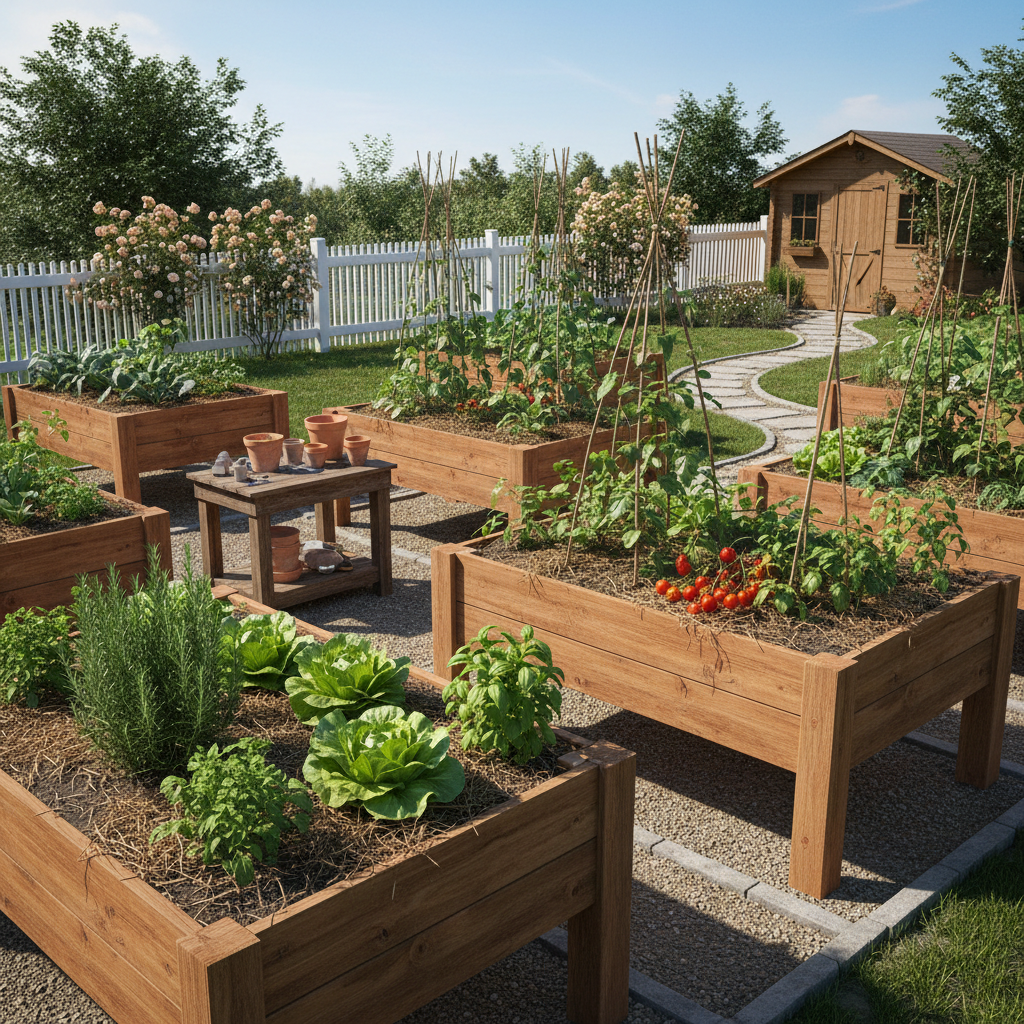
Multiple elevated raised garden beds arranged in a backyard garden
What to Plant in Your Raised Bed
The soil mix is where raised beds truly shine. The most popular mix is called 'Mel's Mix' (after Mel Bartholomew): one-third compost, one-third peat moss or coconut coir, and one-third coarse vermiculite. This combination is lightweight, well-draining, moisture-retaining, and extraordinarily fertile. If you're purchasing soil, look for a quality raised bed mix rather than topsoil, which will compact over time. Add 2-3 inches of fresh compost to your bed every spring to replenish nutrients and maintain soil structure. For more on soil health, read our guide on naturally improving garden soil.
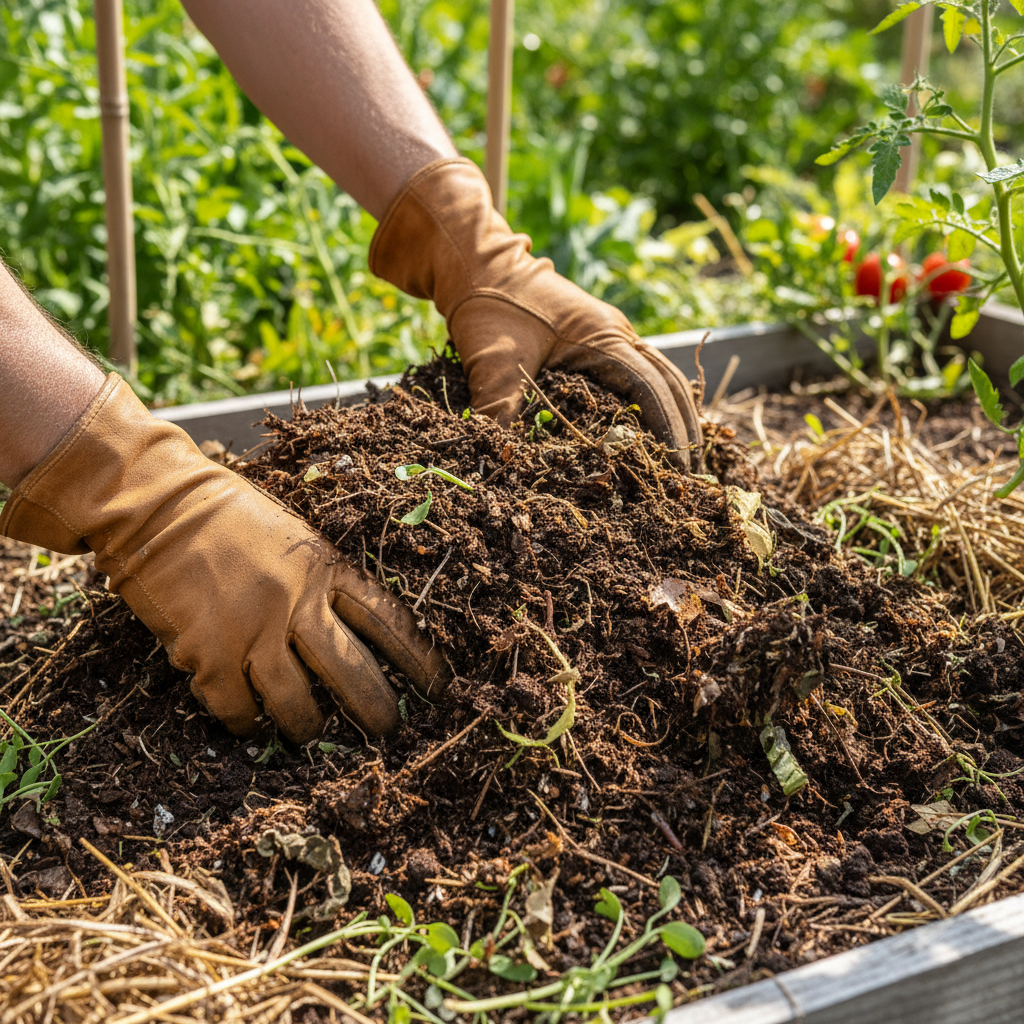
Rich dark compost and soil being mixed for raised bed filling
Watering, Feeding, and Maintenance
Raised beds are ideal for nearly all vegetables, but some benefit especially from the environment they create. Salad greens, radishes, carrots (in deep beds), herbs, tomatoes, peppers, beans, peas, and brassicas (broccoli, cabbage, kale) all thrive. Root vegetables like carrots and parsnips need a minimum of 12 inches of loose, stone-free soil to develop properly — the fluffy raised bed mix is perfect for them. For a complete guide to choosing crops, see our guide to best vegetables for small gardens.
Extending the Season
Raised beds dry out more quickly than in-ground gardens because they drain efficiently and have more surface area exposed to air. This means more frequent watering is generally needed — especially in hot weather. Check moisture by pressing your finger an inch into the soil; if dry, water thoroughly. A drip irrigation system or soaker hose is ideal for raised beds: it delivers water directly to the root zone, keeps foliage dry (reducing disease), and can be connected to a timer for set-and-forget convenience. Our guide on how often to water your garden has a full breakdown by plant type.
Rich dark compost and soil being mixed for raised bed filling
FAQ
Feed your raised bed regularly. Despite the rich starting mix, plants — especially heavy feeders like tomatoes — deplete nutrients over the growing season. Top-dress with compost monthly, and use a balanced liquid fertilizer every two weeks during active growth. When a crop is finished, remove it completely, add more compost, and replant immediately with a different vegetable family. This practice (crop rotation) prevents the buildup of soil-borne diseases and pests that affect specific plant families.
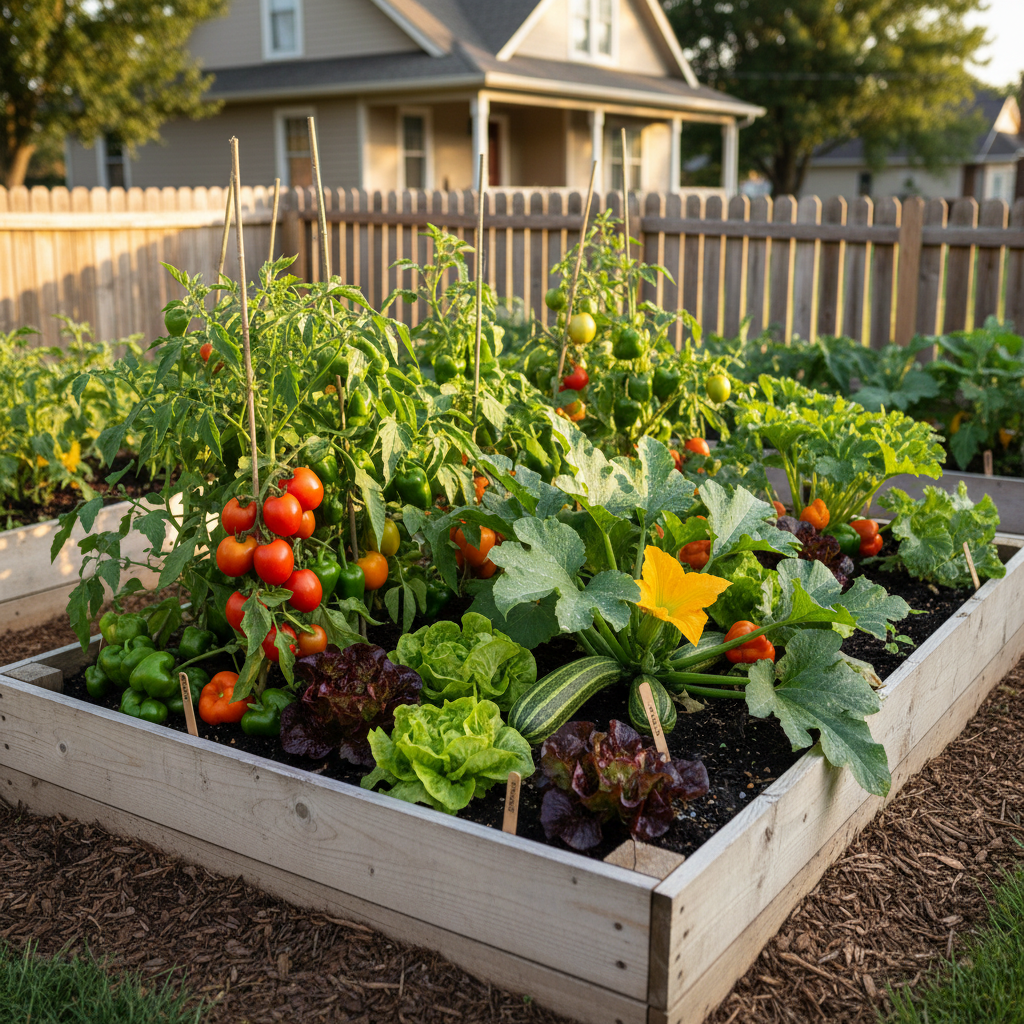
Colorful productive vegetable garden growing in raised beds
One of the greatest advantages of raised beds is the ability to extend your growing season significantly. In spring, place a cold frame (a simple box with a transparent lid) over your bed to start planting four to six weeks before your last frost date. In autumn, use row cover fabric (fleece) draped over hoops to protect crops from frost and add several more weeks of harvest time. A simple cold frame can turn a summer-only bed into a near year-round growing system in mild climates.
Frequently Asked Questions
Recommended Products
Looking for products we personally recommend for this niche?
See our complete list of trusted tools and recommended products.
Browse Recommended Products