In This Article
Why a Seasonal Checklist Changes Everything
Successful gardening isn't just about what you do — it's about when you do it. The difference between a chaotic, struggling garden and a productive, thriving one often comes down to timing. Planting too early, harvesting too late, neglecting pruning, or skipping winter preparation can undermine months of effort. This comprehensive seasonal checklist tells you exactly what to do in each season so your garden stays organized, productive, and beautiful all year round.
Spring Checklist: The Season of Beginnings
Early spring is one of the most important and exciting times in the gardening calendar. As soil temperatures start to rise above 5°C (41°F), the gardening season truly begins. Start seeds indoors six to eight weeks before your last expected frost date — tomatoes, peppers, aubergines, and basil all benefit from this head start. Order and review your seed stock, discarding anything that's several years old (germination rates decline over time). Test your soil and amend as needed — work in compost now so it can integrate before planting season. For soil improvement details, see our guide on naturally improving garden soil.
Summer Checklist: The Season of Growth
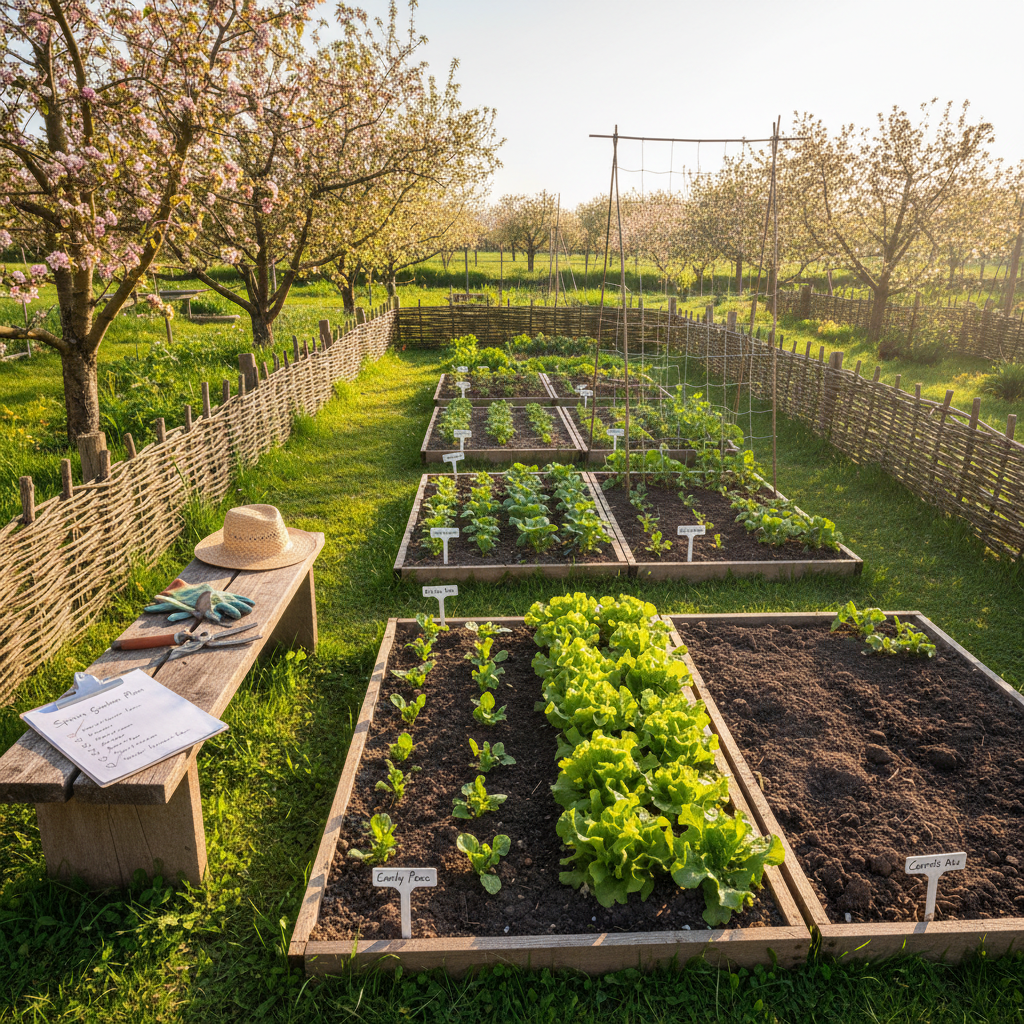
Mid-spring brings the most intense planting activity of the year. Harden off indoor-started seedlings before transplanting to prevent shock. Plant cool-season crops directly in the garden once soil is workable: peas, broad beans, lettuce, spinach, and radishes are all frost-tolerant. Divide overcrowded perennials and replant to refresh their vigor. Install stakes, trellises, and cages before plants need them — it's always easier to set up support structures before plants are growing than trying to wrestle with an established plant. Apply a fresh layer of compost or mulch to beds to retain moisture and feed the soil.
Autumn Checklist: The Season of Harvest
Late spring marks the transition to warm-season planting. After your last frost date, it's safe to plant tender crops outdoors: tomatoes, cucumbers, courgettes, beans, squash, and sweet corn. When planting, water transplants well and provide shade for a day or two to reduce transplant stress. Sow a succession of quick crops like radishes, spring onions, and salad greens every two to three weeks for continuous harvest throughout summer. This simple technique — succession sowing — is arguably the most valuable technique for producing continuous food from a small garden.
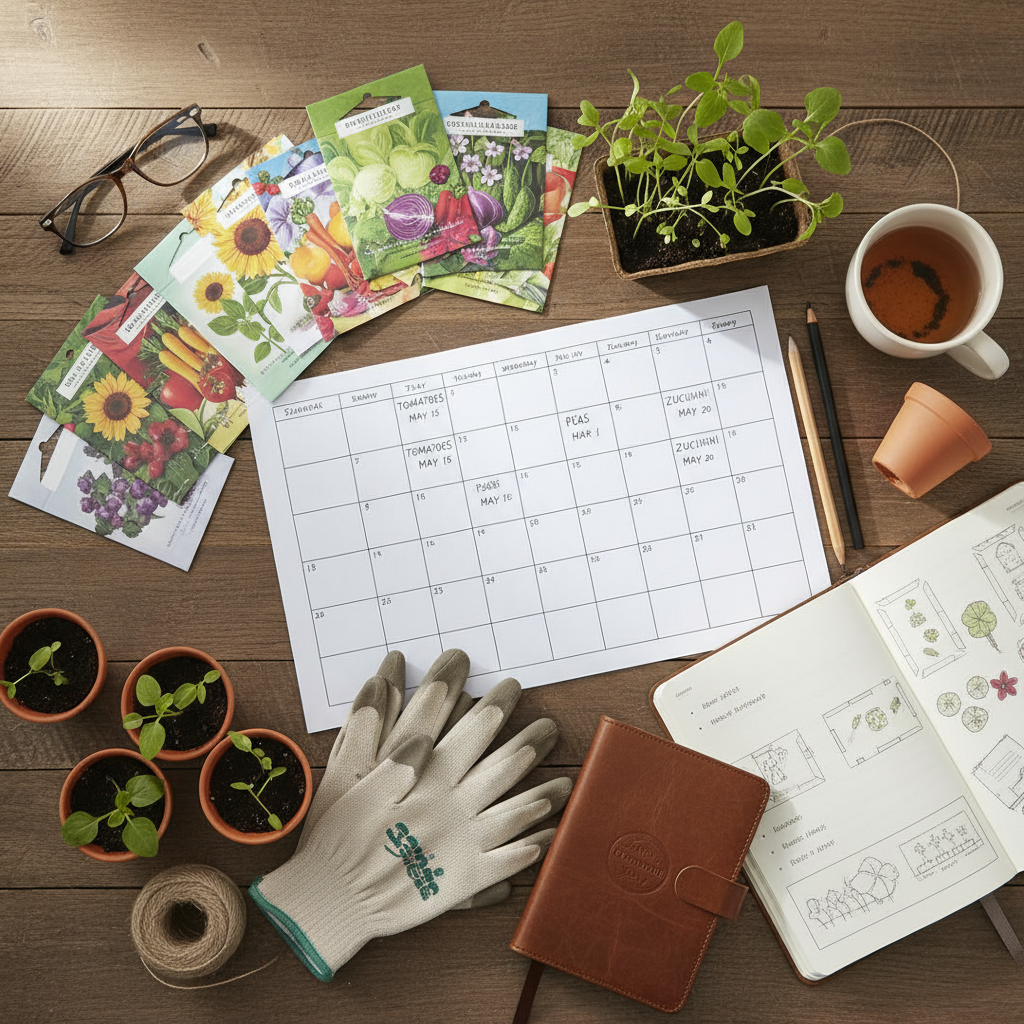
Garden planning scene with calendar, seed packets, and seedlings
Winter Checklist: The Season of Rest and Planning
Summer is the season of maintenance and harvest. Your main jobs are watering, feeding, weeding, and harvesting. Water consistently and deeply — most vegetable gardens need 1-2 inches per week in hot weather. Feed heavy-feeding crops (tomatoes, courgettes, peppers) with a high-potassium liquid fertilizer every two weeks once they begin flowering and fruiting. Harvest regularly — leaving ripe produce on the plant slows further production, while picking regularly triggers the plant to produce more. Deadhead flowers to prolong blooming. Stay on top of weeds before they set seed and multiply exponentially. For watering guidance, see our complete garden watering guide.
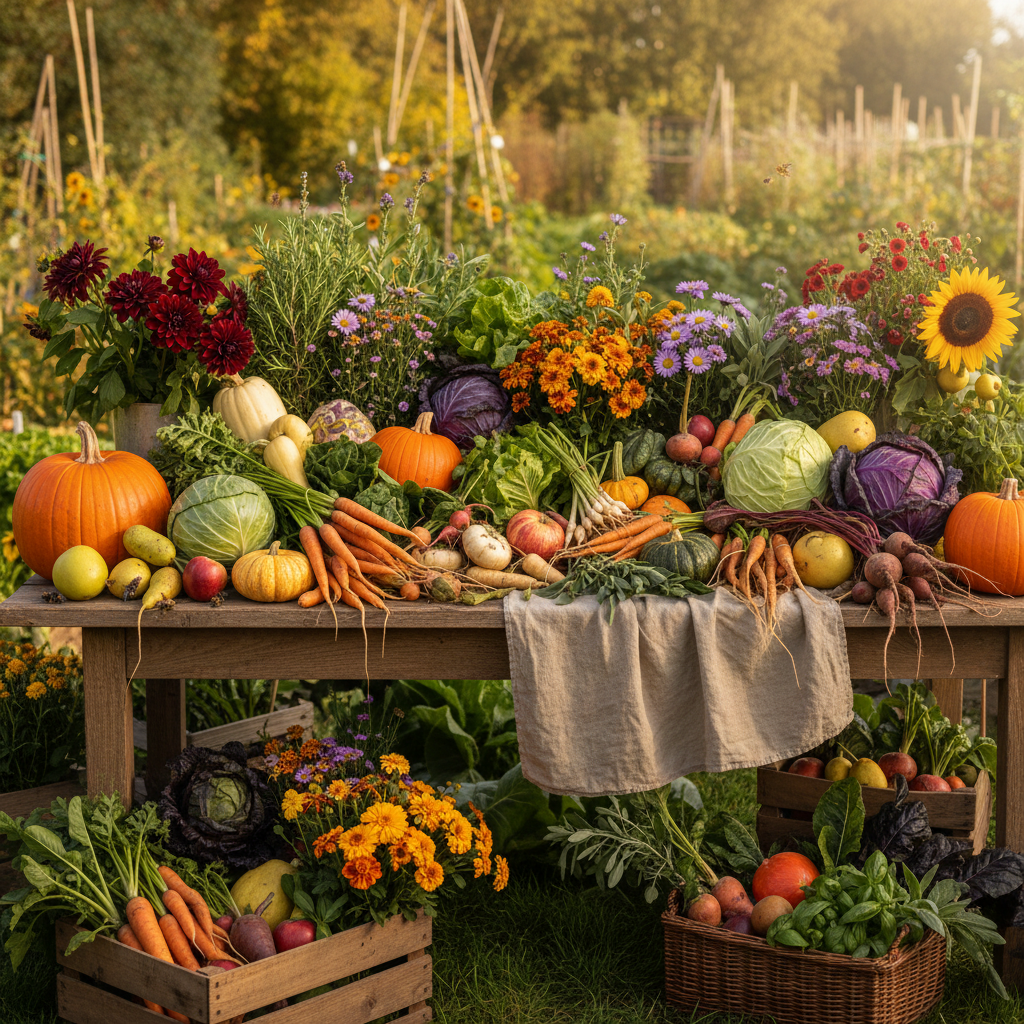
Seasonal garden harvest spread with autumn vegetables and herbs
Year-Round Habits for Better Gardens
Mid-summer is when many gardens require the most attention. Monitor plants daily for pests and diseases, treating promptly at first signs rather than waiting until problems escalate. Pinch out the side shoots (suckers) of cordon tomatoes to keep plants tidy and energy focused on fruit production. Earth up potatoes as haulms (tops) grow, covering them to prevent greening. Keep compost bins turning and moist for maximum decomposition speed. Collect seeds from your best plants for saving — allow seed heads to dry on the plant before harvesting and storing in cool, dry conditions. Our guide on composting tips helps you make the most of summer's abundant green waste.
FAQ
Early autumn brings one of the most rewarding times in the garden — the main harvest season. Harvest winter squash, pumpkins, and maincrop potatoes before the first frost. Cut herbs like basil before cold temperatures damage them, and either use fresh or preserve by freezing or making herb oil. Begin planting spring-flowering bulbs (tulips, daffodils, alliums) and autumn-planted garlic and onion sets. Start clearing and composting spent crop plants. Apply a generous mulch layer to beds you're leaving over winter to protect soil structure and reduce erosion.
Seasonal garden harvest spread with autumn vegetables and herbs
Late autumn and early winter are preparation and planning seasons. Clean and oil garden tools before storing — a sharp, rust-free trowel and fork will serve you much better next season. Move tender potted plants to sheltered positions or indoors. Wrap vulnerable tree and shrub pots with burlap or bubble wrap to insulate roots from hard frosts. Plant garlic and broad beans for an early start next year. Order seed catalogs and begin planning next year's garden — rotate crop families to different beds to prevent disease buildup. Keep a garden journal: record what worked, what didn't, and what you'd like to try. These notes are invaluable when planning improves the following year's results.
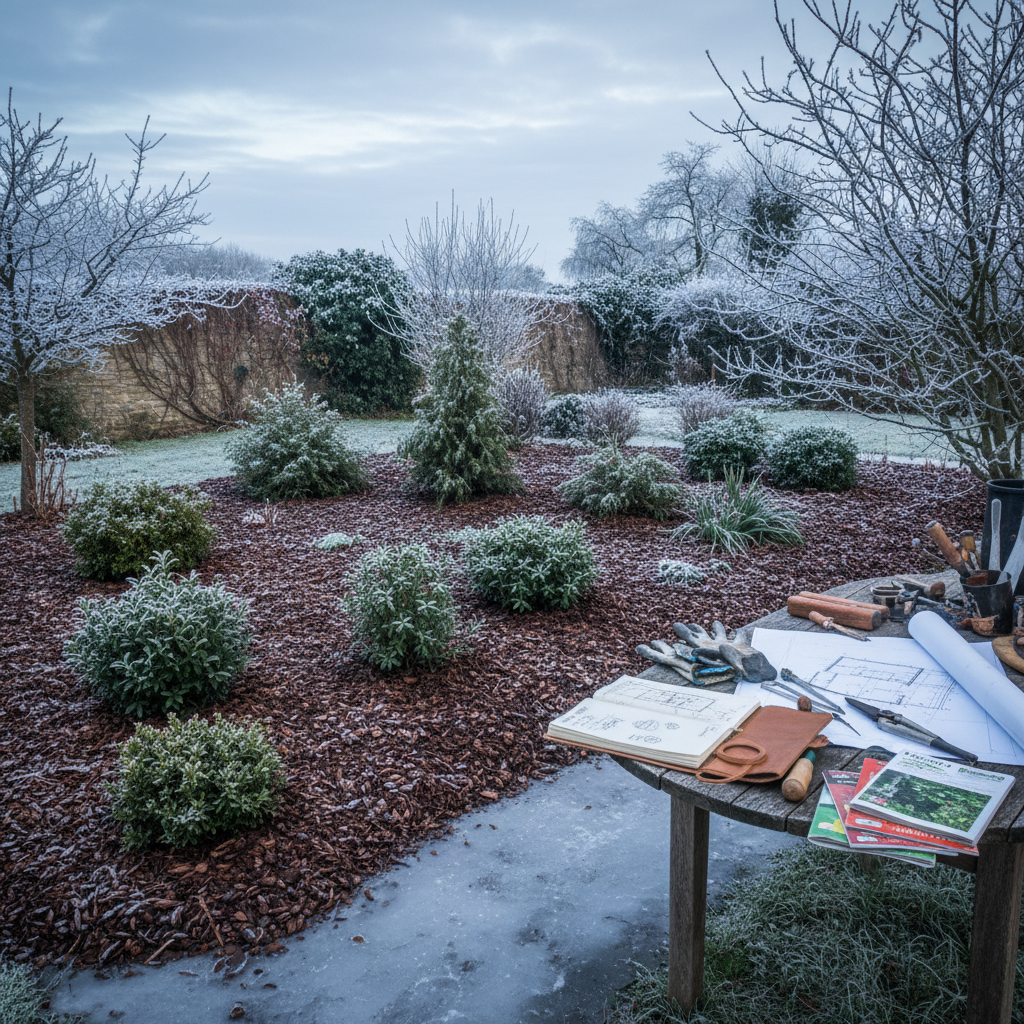
Winter garden with protective mulch and frost-covered plants
Winter is often misunderstood as a dead time in the garden — but it's actually one of the most important for long-term success. Continue composting throughout winter, even if the pile decomposes slowly. Carry out structural garden projects while the ground is bare and accessible: build new raised beds (see our raised bed guide), install new paths, relocate borders. Prune fruit trees and bushes during dormancy for healthier crops next year. Chit (pre-sprout) potatoes in a cool, light spot from late winter. Review and refresh your knowledge by reading gardening books and planning for an even better garden next year. The rest you give your garden in winter sets up the abundance of spring.
Frequently Asked Questions
Recommended Products
Looking for products we personally recommend for this niche?
See our complete list of trusted tools and recommended products.
Browse Recommended Products