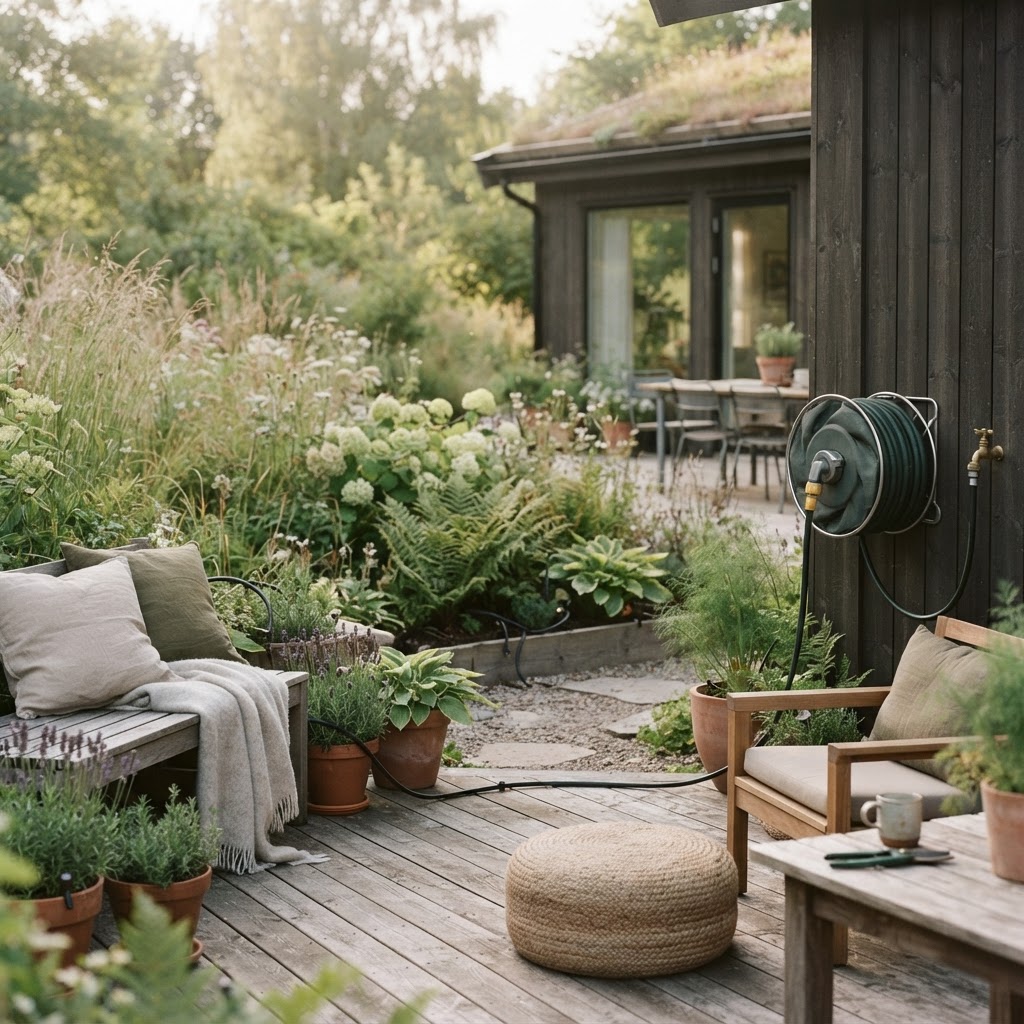
This article may contain affiliate links. If you buy through our links, we may earn a commission at no extra cost to you.
In This Article
Why Invest in a Garden Watering System?
In the heart of a beautiful garden lies the promise of lush greenery and vibrant blooms. For us at Klinta Garden, this means ensuring our plants receive the optimal amount of water, not too much, not too little. Efficient watering is the cornerstone of healthy plant growth and a sustainable garden. However, hand-watering can be time-consuming and often inconsistent, especially during warmer months or when you're away. This is where the best garden watering systems come into play, offering a blend of convenience, efficiency, and precision that traditional methods simply can't match. Whether you're a seasoned gardener or just starting your journey with our beginner's guide, understanding and implementing an effective watering strategy is crucial. This guide will delve into the various garden watering systems available, helping you choose the perfect solution to keep your plants thriving, conserve water, and spend more time enjoying your outdoor oasis. From intricate drip networks to smart controllers, we'll explore the options that best suit different garden sizes, plant types, and your personal needs, ensuring your watering schedule is always on point.
Understanding Different Types of Watering Systems
Investing in a dedicated garden watering system is more than just a convenience; it's a strategic decision for the health of your plants and the sustainability of your garden. Consistent, appropriate watering is fundamental for plant survival and growth. Inconsistent watering, whether too much or too little, can lead to stress, disease, and poor yields for your vegetables. A good watering system ensures that each plant receives the right amount of moisture directly at its roots, promoting stronger root development and healthier foliage. Furthermore, modern watering systems are designed with water conservation in mind. By delivering water precisely where and when it's needed, they significantly reduce water waste compared to manual methods like sprinklers that lose water to evaporation and runoff. This not only benefits the environment but also your water bill. For those using raised beds or growing herbs indoors, precise watering is even more critical due to limited soil volume and faster drying times. Choosing the right system can also save you precious time, freeing you up to enjoy your garden rather than constantly tending to its watering needs. It's an investment that pays dividends in plant vitality and garden efficiency.
Drip Irrigation: The Water-Wise Choice
The world of garden watering systems offers a diverse range of technologies, each with its own strengths and ideal applications. Understanding these differences is key to selecting the best garden watering system for your specific needs. At a high level, systems can be categorized by how they deliver water: direct root zone application, overhead coverage, or gradual soil saturation. Drip irrigation systems, for example, deliver water slowly and directly to the root zone of individual plants. Sprinkler systems, on the other hand, spray water over a wider area, mimicking rainfall, which is effective for lawns and densely planted beds but can be less efficient due to evaporation. Soaker hoses offer a middle ground, seeping water directly into the soil along their length. Increasingly, smart watering controllers are integrating with these delivery methods, using weather data and soil moisture sensors to automate and optimize watering schedules. When considering options for your container garden or a larger plot, think about the plant types, soil conditions, and the layout of your garden to determine which delivery method will be most beneficial. Exploring gardening tools can also help you manage watering tasks more effectively.
Sprinkler Systems: Broad Coverage for Lawns and Larger Areas
Drip irrigation stands out as one of the most efficient and popular garden watering systems, particularly for vegetable gardens, flower beds, and individual trees or shrubs. Its primary advantage lies in its ability to deliver water directly to the root zone of plants. This targeted approach minimizes water loss through evaporation and wind drift, ensuring that almost all the water reaches the plant's roots. The slow, consistent application of water also helps to prevent fungal diseases often associated with overhead watering and reduces weed growth by keeping the soil surface drier. Installing a drip system involves laying out a network of tubing with emitters strategically placed near each plant. While the initial setup might seem complex, it's highly customizable and adaptable to various garden layouts. For those looking to improve their soil quality and plant health, drip irrigation is an excellent choice. Many homeowners find that a well-designed drip system dramatically reduces their water consumption, making it an eco-friendly and cost-effective solution. You can find various components for drip systems on our recommended products page.
Soaker Hoses: Simple and Effective
Sprinkler systems are a familiar sight in many gardens, offering a broad and often automated way to water lawns, large flower beds, and vegetable patches. They work by spraying water over the landscape, effectively mimicking rainfall. There are several types of sprinklers, including oscillating sprinklers that move back and forth, impact sprinklers that rotate with a clicking sound, and rotary sprinklers that spin to cover large areas. Choosing the right sprinkler head and placement is crucial to ensure even coverage and minimize water waste. While sprinklers are effective for covering large areas quickly, they are generally less water-efficient than drip systems due to evaporation from the spray and potential runoff on sloped surfaces. They can also be less ideal for plants prone to fungal diseases, as the foliage gets wet. However, for establishing new lawns or watering extensive areas where precise individual plant watering isn't feasible, sprinklers remain a valuable tool. Consider their use in conjunction with other watering methods for a comprehensive approach. For managing larger lawn areas, a good hedge trimmer can help maintain surrounding plants.
Smart Watering Controllers: The Future of Garden Care
Soaker hoses offer a straightforward and highly effective method for watering garden beds, rows of vegetables, or hedges. Unlike traditional hoses that spray water, soaker hoses are designed to seep water slowly and directly into the soil along their entire length. This method delivers moisture precisely to the root zone, minimizing evaporation and water waste. They are particularly beneficial for gardens where plants are spaced relatively close together, such as in raised beds or tightly planted borders. Installation is as simple as connecting the hose to a water source and laying it around your plants. The slow seepage rate ensures that the soil absorbs water gradually, preventing runoff and over-saturation. Soaker hoses are an excellent eco-friendly option, reducing water consumption significantly compared to sprinklers. They are also relatively inexpensive and easy to set up, making them a great choice for beginner gardeners or those seeking a low-maintenance watering solution. Coupled with good planters, they can ensure even your container plants are well-hydrated.
Manual Watering: When and How
The advent of smart watering controllers has revolutionized garden watering, bringing unprecedented efficiency and convenience to plant care. These intelligent devices connect to your existing irrigation system (drip or sprinkler) and use a variety of data inputs to automate watering schedules. This can include local weather forecasts, historical weather data, and even direct soil moisture sensor readings. By understanding current and predicted weather conditions, smart controllers can skip watering cycles when rain is expected or adjust watering duration based on temperature and humidity. This prevents overwatering and underwatering, ensuring plants receive precisely what they need, when they need it. Many smart controllers can be operated and monitored remotely via smartphone apps, allowing you to adjust settings or manually water from anywhere. This is a game-changer for busy gardeners or those who travel frequently. Integrating a smart controller is a significant step towards a truly efficient and water-wise garden, complementing systems like vertical gardens.
Choosing the Right System for Your Klinta Garden
While automated systems offer incredible benefits, there are still times and situations where manual watering is necessary or even preferable. For very small gardens, a watering can or a standard garden hose with an adjustable nozzle may suffice. It allows for precise watering of individual plants that might be missed by an automated system, such as newly transplanted seedlings or specimens requiring specific attention. Manual watering also gives you a chance to observe your plants closely, checking for pests, diseases, or signs of stress. For example, if you notice wilting leaves on a particularly hot day, you can provide immediate, targeted relief. It’s also important to know the best practices for manual watering: water early in the morning to reduce evaporation and allow foliage to dry before nightfall, and aim water at the base of the plant, directly onto the soil. This hands-on approach, though time-consuming for larger areas, offers a deep connection with your garden and ensures no plant is overlooked. A good pair of gardening gloves will make this task more comfortable.
Choosing the best garden watering system for your Klinta Garden involves considering several factors unique to your space and gardening style. Firstly, assess the size and layout of your garden. Are you dealing with a small balcony with planters, a compact urban yard, or an expansive lawn? For smaller spaces or targeted watering of individual plants like vegetables or herbs, drip irrigation or soaker hoses are highly efficient. For larger areas, especially lawns, a well-designed sprinkler system might be more practical, perhaps augmented with smart controls. Consider the types of plants you are growing; different plants have different water needs. A mixed border might benefit from a combination of systems. Soil type also plays a role – sandy soils drain quickly and may need more frequent, shorter watering, while clay soils retain moisture longer. Finally, think about your budget and the time you can dedicate to maintenance. While initial costs vary, long-term benefits like water savings and reduced workload often make the investment worthwhile. Don't forget to consider accessories like outdoor string lights to enhance your garden ambiance after watering is done. Ultimately, the best system is the one that keeps your plants healthy and your gardening experience enjoyable. Explore our recommended products for a curated selection to help you make the right choice.
Frequently Asked Questions
Recommended Products
Looking for products we personally recommend for this niche?
See our complete list of trusted tools and recommended products.
Browse Recommended Products